When a refrigerator stops cooling properly, every hour matters. Food is at risk, the kitchen routine gets disrupted fast, and what starts as a small issue can turn into a costly one. This refrigerator repair guide is built to help you recognize the most common warning signs, try safe first steps, and know when professional service is the smarter move.
A refrigerator is one of the few appliances that runs all day, every day. Because of that, even minor wear can show up as temperature swings, unusual noises, water on the floor, or frost where it does not belong. Some of these problems have simple causes. Others point to failing parts that need trained diagnosis, especially when electrical components, sealed systems, or built-in ice makers are involved.
How to use this refrigerator repair guide
Start with the symptom you notice most clearly. Is the fridge warm but the freezer still cold? Are you hearing clicking, buzzing, or rattling? Is water collecting under the crisper drawers or leaking onto the floor? The most efficient repairs begin with the right symptom, not guesswork.
Before touching anything, unplug the refrigerator if you plan to inspect interior components beyond basic cleaning. If food safety is already a concern, move perishable items to a cooler or a second refrigerator first. If you smell something burning, see damaged wiring, or suspect a refrigerant problem, stop there and arrange service.
Refrigerator not cooling enough
Poor cooling is the issue most homeowners notice first. Sometimes the refrigerator section warms up while the freezer still seems normal. In other cases, both compartments lose temperature at the same time.
The first thing to check is airflow. Overpacked shelves can block vents and keep cold air from circulating. If the refrigerator is packed tightly against the back wall, cold air may not move properly between compartments. Rearranging food sounds simple, but it solves more problems than many people expect.
Next, check the temperature settings. Controls can be bumped during cleaning or while loading groceries. A fresh food section should usually stay around 37 to 40 degrees Fahrenheit, while the freezer should be around 0 degrees Fahrenheit.
Dirty condenser coils are another common cause. When coils are coated in dust and pet hair, the refrigerator cannot release heat efficiently. That makes the compressor work harder and cooling performance drops. Coils are often located underneath or behind the unit, and careful cleaning can improve performance.
If the refrigerator still is not cooling after those steps, the problem may involve the evaporator fan motor, condenser fan motor, thermostat, control board, start relay, or compressor. At that stage, diagnosis becomes more technical. Some parts can fail intermittently, which makes the problem harder to pin down without testing equipment.
Freezer works, fridge is warm
This specific symptom usually points to an airflow issue between the freezer and fresh food section. Many refrigerators cool the refrigerator compartment by moving cold air from the freezer. If that air is not traveling properly, the freezer may stay cold while milk, produce, and leftovers warm up.
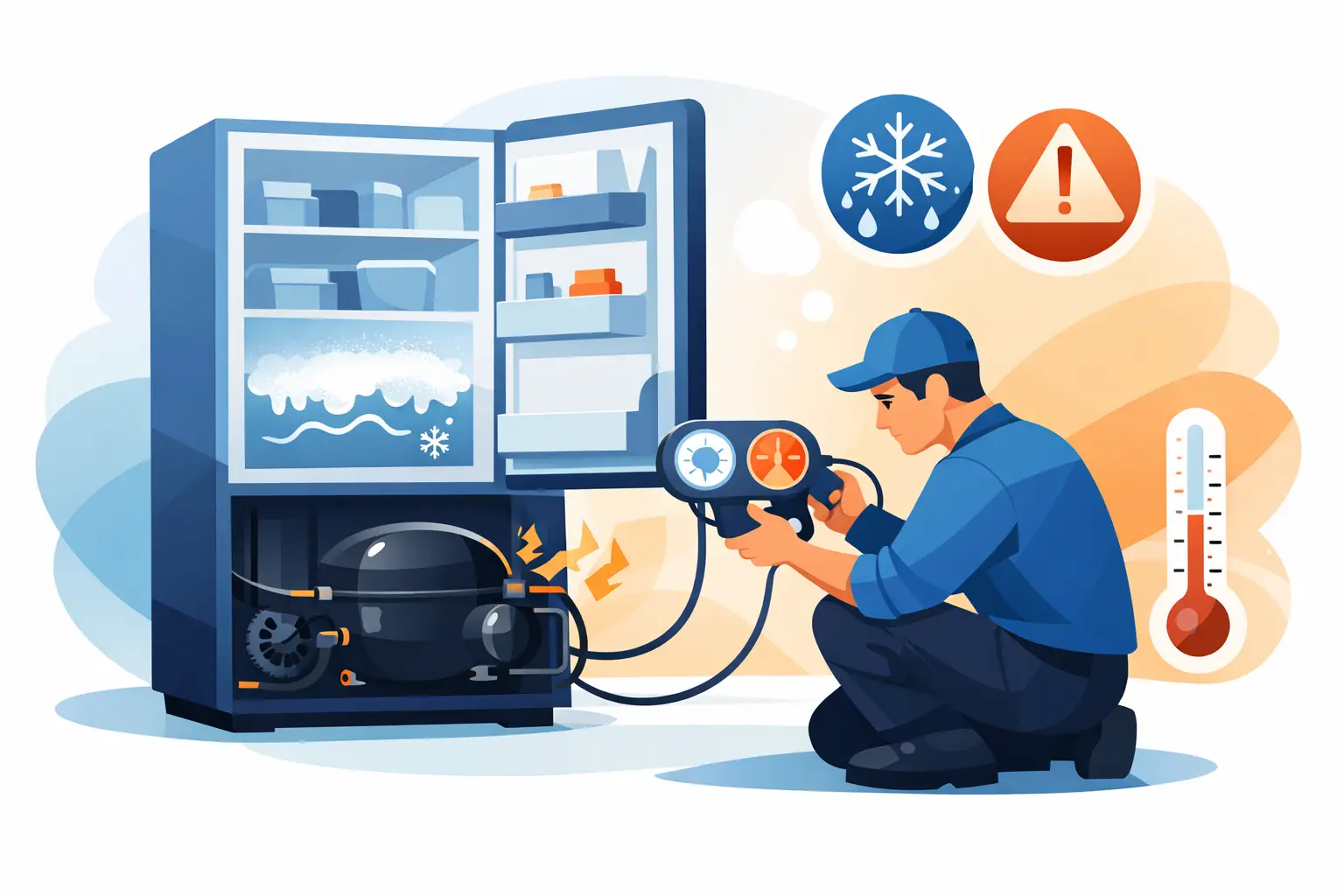
A blocked air damper, a failed evaporator fan, or heavy frost buildup on the evaporator coils are common causes. Frost buildup often means the defrost system is not doing its job. That system can include a heater, thermostat, sensor, or control board depending on the model.
This is where a quick visual check helps. If the back panel inside the freezer has a thick layer of frost or snow-like ice, a defrost problem is likely. You may be tempted to melt everything with a hair dryer, and while that can temporarily restore airflow, it does not fix the failed part behind the buildup. The cooling may return for a short time, then fail again.
Refrigerator leaking water
Water under the refrigerator or inside the fresh food section is frustrating, but the source is not always serious. A clogged defrost drain is one of the most common causes. When that drain freezes or gets blocked with debris, water has nowhere to go and starts pooling in places it should not.
If your refrigerator has a water dispenser or ice maker, the supply line is another possible source. A loose fitting, cracked tube, or damaged valve can produce a slow leak that gets worse over time. Because the leak may happen behind the unit, many people do not notice it until the floor is wet.
Door seal issues can contribute too. If warm air gets in, condensation increases and excess moisture forms. That can look like a leak even though the real issue is humidity and poor sealing.
Leaks are a good example of why timing matters. A small drip may seem manageable, but ongoing moisture can damage flooring, cabinetry, and insulation around the appliance. If you cannot identify the source quickly, it is best to have it inspected before a minor leak turns into a larger home repair.
Strange noises from the refrigerator
Refrigerators make some normal sounds. Humming, light clicking, fan noise, and occasional popping during defrost cycles can all be expected. What is not normal is a sudden grinding sound, loud buzzing, repeated clicking without cooling, or rattling that gets worse.
A rattling noise may be as simple as the refrigerator not sitting level or a drain pan vibrating. A buzzing sound can sometimes come from the water inlet valve, especially if the ice maker is turned on without a water supply connected. Grinding or squealing often points to a fan motor problem.
Repeated clicking is worth paying attention to. If the compressor tries to start and then clicks off, the cause might be a faulty start relay or a failing compressor. One is a relatively straightforward repair. The other is more serious and can affect whether repair is worthwhile depending on the age and condition of the refrigerator.
Too much frost or ice buildup
Frost where it should not be is a red flag. In a manual defrost freezer, some frost is expected. In most modern frost-free refrigerators, it is not.
If frost builds up around the freezer door, the gasket may not be sealing well. Warm, moist air enters, hits cold surfaces, and turns to frost. If frost covers the back freezer wall, the defrost system is a stronger suspect. If the ice maker area is jammed with ice, the fill valve, fill tube, or ice maker assembly may be involved.
The trade-off here is that some frost issues are affordable to repair, while sealed system cooling issues are more complex. A proper diagnosis matters because the visible frost is not always the root problem.
What you can safely check before calling for service
A few homeowner checks are reasonable and often worthwhile. Make sure the unit has power, the breaker has not tripped, and the outlet is working. Confirm the controls are set correctly. Clean the condenser coils if they are accessible. Inspect the door gaskets for gaps, tears, or food debris that prevents a tight seal. Make sure the refrigerator is level and has enough clearance for ventilation.
You can also listen for fans and the compressor. If the interior lights are on but the refrigerator is warm and unusually quiet, a fan or control issue could be present. If it is clicking repeatedly, avoid repeated unplugging and restarting. That can add stress to already failing components.
These checks are useful because they separate basic maintenance issues from actual part failures. They also give a technician clearer information, which can speed up diagnosis.
When this refrigerator repair guide points to professional help
Some refrigerator problems should not be treated as do-it-yourself repairs. Electrical faults, compressor issues, refrigerant concerns, and gas-related appliance service all require trained handling. Even with standard refrigerators, sealed system work involves specialized tools and certification.
Ice makers, control boards, thermistors, inverter systems, and built-in refrigeration can also be more complicated than they appear. Replacing the wrong part is common when symptoms overlap. That turns one service issue into multiple costs.
For busy households and small commercial operators, downtime is part of the repair decision. If the refrigerator stores daily groceries, medication, catering supplies, or breakroom inventory, waiting too long can cost more than the repair itself. Fast, in-home diagnosis often protects both the appliance and everything inside it.
Repair or replace?
It depends on the age of the refrigerator, the failed part, and the overall condition of the unit. A door gasket, fan motor, drain issue, thermostat, or start relay often makes sense to repair. A compressor or sealed system problem can be more expensive, especially on older models.
That said, age alone should not decide it. A well-built refrigerator with a single failed component may still have years of reliable service left after repair. On the other hand, a newer unit with repeated electronic failures may deserve a closer cost-benefit review. The right answer comes from an honest diagnosis, not a blanket rule.
A dependable service company should explain what failed, what the repair involves, and whether the investment is practical. That clarity matters just as much as the repair itself.
If your refrigerator is warm, leaking, noisy, or icing up, do not wait for the problem to sort itself out. A careful check today can prevent spoiled food, water damage, and a more expensive breakdown tomorrow. When the issue goes beyond basic maintenance, professional service gives you the safest path back to a reliable kitchen.