A refrigerator is rarely silent. You may hear a low hum when the compressor starts, a brief whir as a fan runs, or a soft clicking sound during normal operation. But a fridge making buzzing noise that becomes loud, repeats often, or comes with warmer food deserves attention. The right response can protect your groceries, prevent a larger breakdown, and help you avoid unsafe DIY repairs.
When a fridge making buzzing noise is normal
A gentle, steady buzz from the back or lower portion of the refrigerator is often normal. The compressor and condenser fan work together to remove heat from the appliance, and both create some sound. Many newer refrigerators also have ice makers, water valves, and electronic controls that add occasional noises.
A normal buzz is usually low, short-lived, and does not affect cooling. It may become more noticeable after the door has been opened several times, after you have loaded warm groceries, or during a defrost cycle. The refrigerator may run longer on a hot day as well.
The concern is not simply that you hear a buzz. It is whether the sound is new, unusually loud, vibrating through the floor or cabinets, or paired with symptoms such as spoiled food, frost buildup, leaking water, or a refrigerator that cycles on and off without staying cold.
Common reasons your refrigerator is buzzing
The refrigerator is not level
An uneven refrigerator can vibrate against the floor, wall, cabinetry, or a nearby appliance. That vibration may sound like buzzing, rattling, or a dull mechanical hum. It can also cause the condenser fan or compressor area to transmit more noise than usual.
Check that the refrigerator is not touching the wall and that there is adequate clearance around the sides and back. If it rocks when you gently press a top corner, the leveling feet may need adjustment. Avoid forcing the unit into place or sliding it alone if it is heavy. A small change in position can sometimes eliminate a vibration, but leveling should be done carefully to protect flooring and water connections.
Dirty condenser coils are making the system work harder
Condenser coils release heat from the refrigerator. When they are covered in dust, pet hair, or debris, the system may run longer and the compressor may sound louder than usual. This is especially common in homes with pets or in kitchens where dust collects beneath appliances.
If your model has accessible coils, unplug the refrigerator before cleaning. Use a vacuum with a brush attachment and clean gently. Do not bend coil fins, pull on wiring, or remove panels that are not intended for routine access. If the refrigerator still buzzes loudly after the coils are cleaned and it is not cooling consistently, a technician should inspect the system.
The condenser fan is obstructed or failing
The condenser fan is typically located near the compressor at the lower rear of the refrigerator. It helps move air across the condenser area. A blade that is dirty, blocked, loose, or worn can create a buzzing or grinding sound.
With the appliance unplugged, you may be able to look through the lower rear access area for obvious debris. Do not reach into the fan housing or attempt to test it while power is connected. A damaged fan motor can overheat the compressor area and reduce cooling performance, so it is a repair worth addressing promptly.
The evaporator fan has ice buildup or a motor problem
If the buzzing seems to come from inside the freezer compartment, the evaporator fan may be involved. This fan circulates cold air through the refrigerator and freezer. Ice buildup can interfere with the fan blade, creating a buzzing, scraping, or chirping sound. A failing fan motor may make a louder noise that changes when the freezer door is opened or closed.
A freezer that has excessive frost, weak airflow, or uneven temperatures may have more than a simple fan issue. Defrost components, door seals, control boards, and drainage problems can all contribute to ice buildup. Repeatedly thawing the appliance without finding the underlying cause may only delay the next failure.
The ice maker or water inlet valve is buzzing
A buzzing sound near the back of the refrigerator can occur when the ice maker calls for water. A brief buzz during a fill cycle is expected. However, a loud buzz that lasts longer than a few seconds may mean the water supply is shut off, kinked, frozen, or restricted.
If you do not use the ice maker and no water line is connected, turn the ice maker off. Operating an ice maker without water can cause the inlet valve to buzz. If there is a water line, check only the visible section for a kink or a closed shutoff valve. Do not disconnect water lines unless you are prepared to manage a leak and properly restore the connection.
The compressor or start relay may be struggling
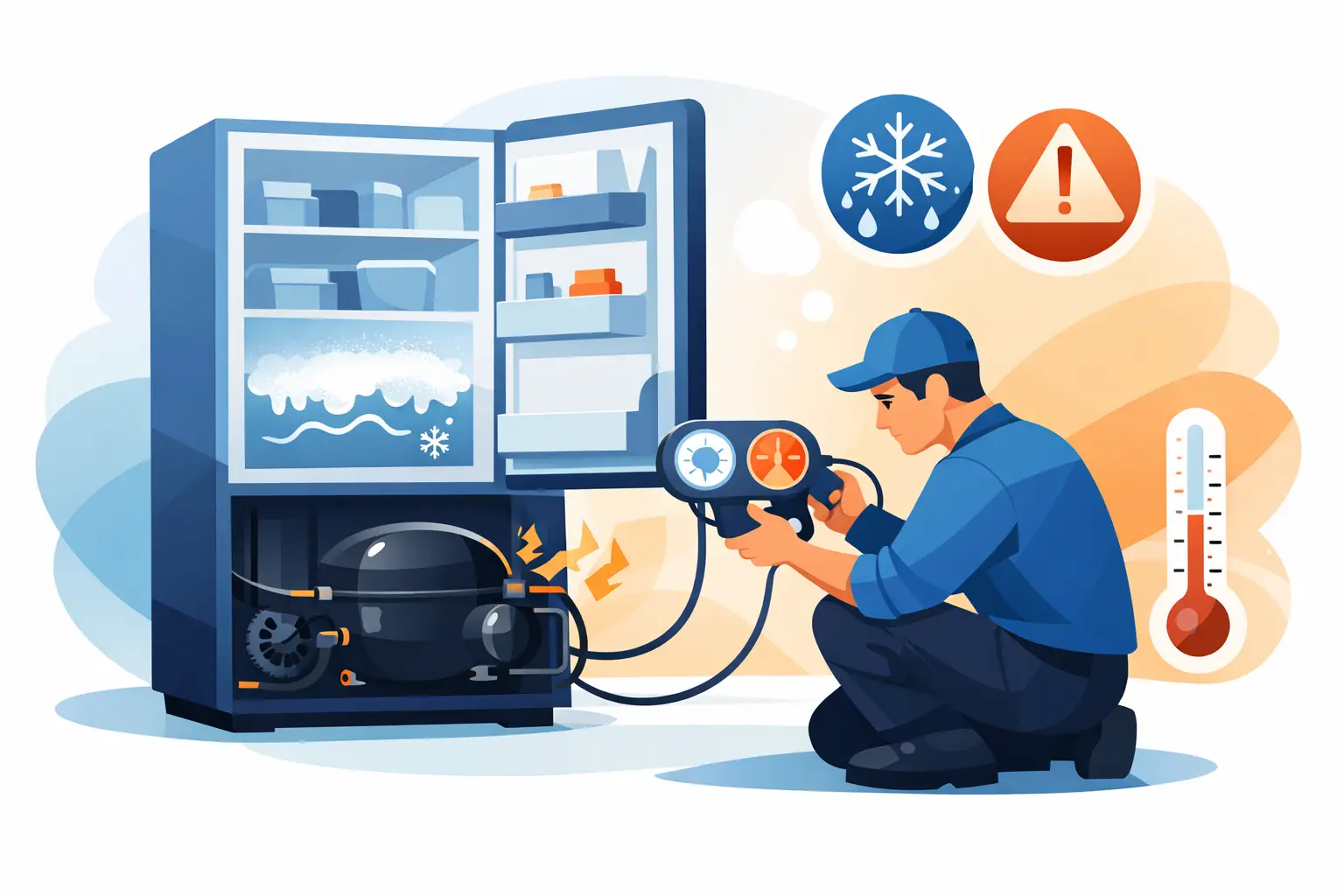
A more serious pattern is a buzz followed by a click every few minutes. The compressor may be attempting to start and then shutting down. This can point to a faulty start relay, compressor problem, electrical issue, or control failure.
If this happens while the refrigerator is getting warm, treat it as an urgent repair concern. Moving food to a cooler and arranging professional service quickly can reduce food loss. Compressor and electrical diagnosis requires proper testing equipment and should not be handled as a DIY project.
Safe checks to make before booking service
You can gather useful information without taking the refrigerator apart. Start by listening for the location of the sound: inside the freezer, behind the unit, or near the water connection. Notice whether it happens constantly, only when the ice maker runs, or just before a click.
Then confirm that the refrigerator is cooling properly. Check for warm milk, soft frozen food, excessive frost, water under crispers, or a display showing an error code. Make sure doors close fully and that food packages are not blocking interior vents.
For a basic reset, unplug the refrigerator for about five minutes and reconnect it. This may clear a temporary control issue, but it will not repair a worn fan, failed relay, or sealed-system problem. If the buzzing returns immediately, becomes louder, or cooling does not recover, do not keep resetting the appliance repeatedly.
When to stop troubleshooting and call a professional
Some refrigerator noises are inconvenient. Others signal a condition that can lead to a full loss of cooling or a damaged component. Schedule refrigerator repair if the buzz is accompanied by any of the following:
- The refrigerator or freezer is not holding a safe temperature.
- You hear repeated buzzing and clicking from the back of the unit.
- There is a burning smell, hot electrical odor, smoke, or a tripped breaker.
- The fan appears to scrape, grind, or stop running.
- Frost keeps returning, water leaks, or the unit runs almost nonstop.
For any burning odor, smoke, sparking, or overheating, unplug the refrigerator if it is safe to do so and keep it away from flammable materials. Do not continue using it while waiting for help.
A trained technician can isolate whether the sound comes from a fan motor, inlet valve, compressor start device, defrost system, or another component. That matters because replacing parts based on noise alone can be expensive and ineffective. Appliance Tech Pros provides safety-focused refrigerator diagnostics and repair designed to restore reliable cooling without unnecessary guesswork.
A quieter refrigerator starts with timely care
Keep the space around your refrigerator clean, avoid overpacking its vents, and have abnormal sounds checked before they turn into a warm refrigerator and wasted groceries. If the buzz has changed or your cooling is no longer dependable, prompt professional service can bring back the quiet confidence you expect from an essential appliance.