A small puddle beneath the refrigerator can quickly become warped flooring, a damaged cabinet base, or a slip hazard. If you are asking, “why is my fridge leaking water,” the good news is that many leaks have a clear source. The important part is finding it early, taking a few safe steps, and knowing when the problem needs professional refrigerator repair.
Protect Your Floor and Food First
Before investigating, move towels around the base of the refrigerator and wipe up standing water. If water is collecting near an outlet, avoid handling plugs or cords while the floor is wet. Once the area is dry, unplug the refrigerator if you need to inspect behind it or remove interior panels.
If your refrigerator has a water dispenser or ice maker, turn off its water supply valve before checking the rear water line. Keep the doors closed as much as possible while you work so your food stays cold. If the refrigerator is not cooling properly, transfer perishables to a cooler with ice and arrange service promptly.
A quick look at the location of the puddle can provide a useful clue. Water inside the fresh-food compartment often points to a defrost drainage issue. Water near the front may be condensation or an uneven refrigerator, while water behind the unit can indicate a supply-line, filter, or drain-pan problem.
Why Is My Fridge Leaking Water? The Most Common Causes
1. A clogged or frozen defrost drain
This is one of the most frequent causes of water appearing under or inside a refrigerator. During normal defrost cycles, melted frost should flow through a small drain opening and tube into a pan underneath the appliance. Food debris, ice, or residue can block that route.
When the drain is blocked, water has nowhere to go. It may pool under crisper drawers, freeze into a sheet of ice, then spill onto the kitchen floor when it melts. Repeated ice buildup is a sign that simply wiping up the water will not solve the problem. The drain needs to be cleared correctly, and any underlying defrost issue should be checked.
2. A leaking ice maker or water line
A refrigerator with an ice maker uses a small water line connected to the household supply. A loose fitting, cracked plastic line, damaged valve, or pinched hose can create a slow leak behind the refrigerator. Because this area is out of sight, the leak may continue for days before it becomes noticeable.
Pulling the refrigerator out without scratching the floor can be difficult, particularly with a heavy built-in or French-door model. If you see moisture around the supply connection, shut off the water valve and avoid tightening fittings aggressively. A worn connection can break or leak more heavily when disturbed.
3. A loose, incorrect, or damaged water filter
If the leak started shortly after replacing the water filter, inspect the filter housing first. A filter that is not fully seated, installed at an angle, or not compatible with the model can allow water to drip inside the refrigerator or down the back wall.
Remove and reinstall the filter according to the refrigerator’s instructions. Check the filter head and surrounding housing for cracks. If the housing is damaged, replacing the filter alone will not stop the leak. Continuing to use the dispenser can send more water into the cabinet or onto the floor.
4. A door gasket that is letting warm air in
The rubber gasket around the refrigerator and freezer doors creates the seal that keeps cold air inside. When it is torn, dirty, flattened, or blocked by a food package, warm humid air enters the compartment. That moisture condenses on cold surfaces and can run down into drawers or onto the floor.
Check whether the door closes without being pushed and whether the gasket makes full contact along all sides. Clean visible residue with warm water and mild soap, then dry it thoroughly. If the gasket remains split or loose, replacement is usually the reliable fix.
5. The refrigerator is not level
Most refrigerators need a slight backward tilt so the doors close on their own and condensation drains as designed. If the unit leans forward or rocks on the floor, water may collect in the wrong area. An unlevel refrigerator can also prevent doors from sealing consistently.
Use a level across the top of the cabinet and check that all feet are firmly supported. Adjusting the front leveling legs can help, but do not force them if they are corroded or difficult to turn. The appliance should be stable, with doors that close smoothly and evenly.
6. A cracked or overflowing drain pan
Below many refrigerators is a drain pan that collects defrost water. Heat from the compressor and surrounding airflow normally evaporate that water. If the pan is cracked, misaligned, or overflowing due to excessive condensation, water can drip below the unit.
A pan problem can be simple, but access varies widely by model. Some pans are easy to inspect from the front or rear, while others sit near electrical components and are not intended for routine homeowner removal. If you cannot clearly see the pan or find a crack, a technician can inspect it safely.
7. A temperature or defrost-system fault
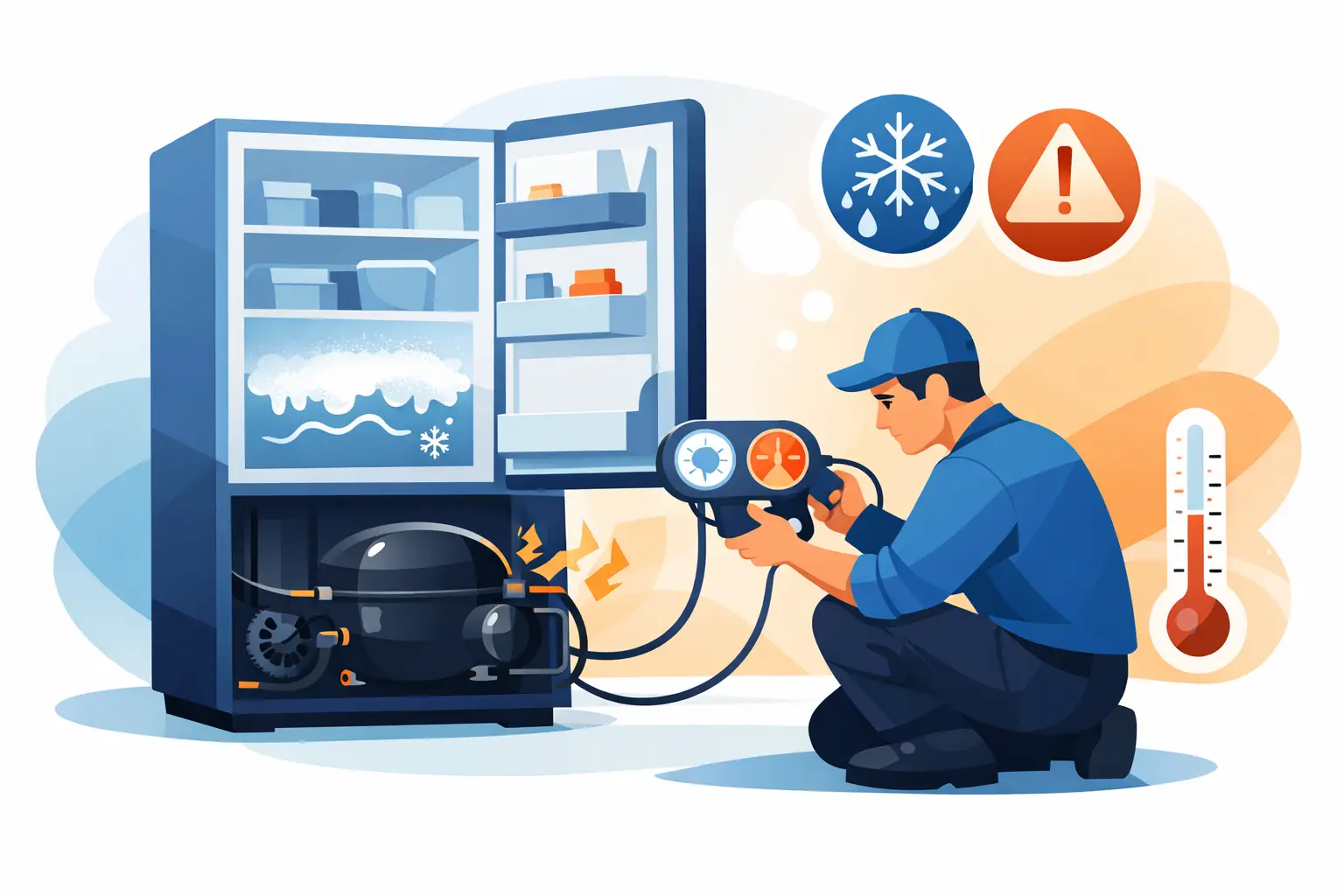
A leak is sometimes a symptom rather than the main problem. A faulty defrost heater, sensor, timer, fan, or control can create excess frost. As that frost melts, the drain system becomes overwhelmed or frozen shut. You may also notice poor cooling, unusual fan noise, frost on the freezer wall, or food that is softer than normal.
This type of repair calls for a proper diagnosis. Replacing a visible part without testing the system can waste time and leave the original fault unresolved.
Safe Checks You Can Make Before Booking Service
After stopping the water and drying the area, look for obvious signs without disassembling the refrigerator. Check the interior floor beneath the crisper drawers, inspect the water filter installation, and examine the door seals. Then look behind the unit for a wet supply line or a puddle near the rear base.
Avoid using sharp objects to chip ice from a drain hole or freezer panel. A punctured liner or damaged refrigerant line can turn a manageable leak into a major repair. It is also best not to pour large amounts of hot water into the refrigerator, as sudden temperature changes can damage plastic components and push water into electrical areas.
If a small amount of water appeared once after a door was left open, clean up, confirm the gasket is sealing, and monitor the refrigerator over the next day. But recurring water, interior ice, or moisture near the water connection deserves faster attention.
When a Refrigerator Leak Needs Professional Repair
Call for service if water returns after you clean it up, the refrigerator is not holding temperature, or you see ice forming repeatedly in the bottom of the freezer or refrigerator compartment. You should also schedule repair if the leak is coming from the rear water line, filter housing, or any area near wiring.
A trained refrigerator technician can clear the defrost drain, test the defrost system, inspect water connections, correct leveling, and identify cracked components without guesswork. That matters because a slow leak may damage flooring and cabinets long before it becomes a large puddle.
For rental properties and small businesses, prompt repair is especially valuable. A leaking refrigerator in a staff kitchen, break room, or tenant unit can disrupt operations and create avoidable property damage. Document the leak, protect the area, and arrange qualified service before the issue expands.
Help Prevent the Next Leak
Keep food packages from blocking air vents or preventing doors from closing. Wipe spills from the door gasket, replace water filters on schedule, and check behind the refrigerator periodically for dampness. If the unit has an ice maker, inspect the accessible water connection after moving or cleaning around the appliance.
Do not ignore a refrigerator that has started making more frost than usual, cycling constantly, or struggling to keep food cold. Those changes often appear before a drainage or condensation problem becomes visible. A timely repair protects your kitchen, your groceries, and the appliance you rely on every day.