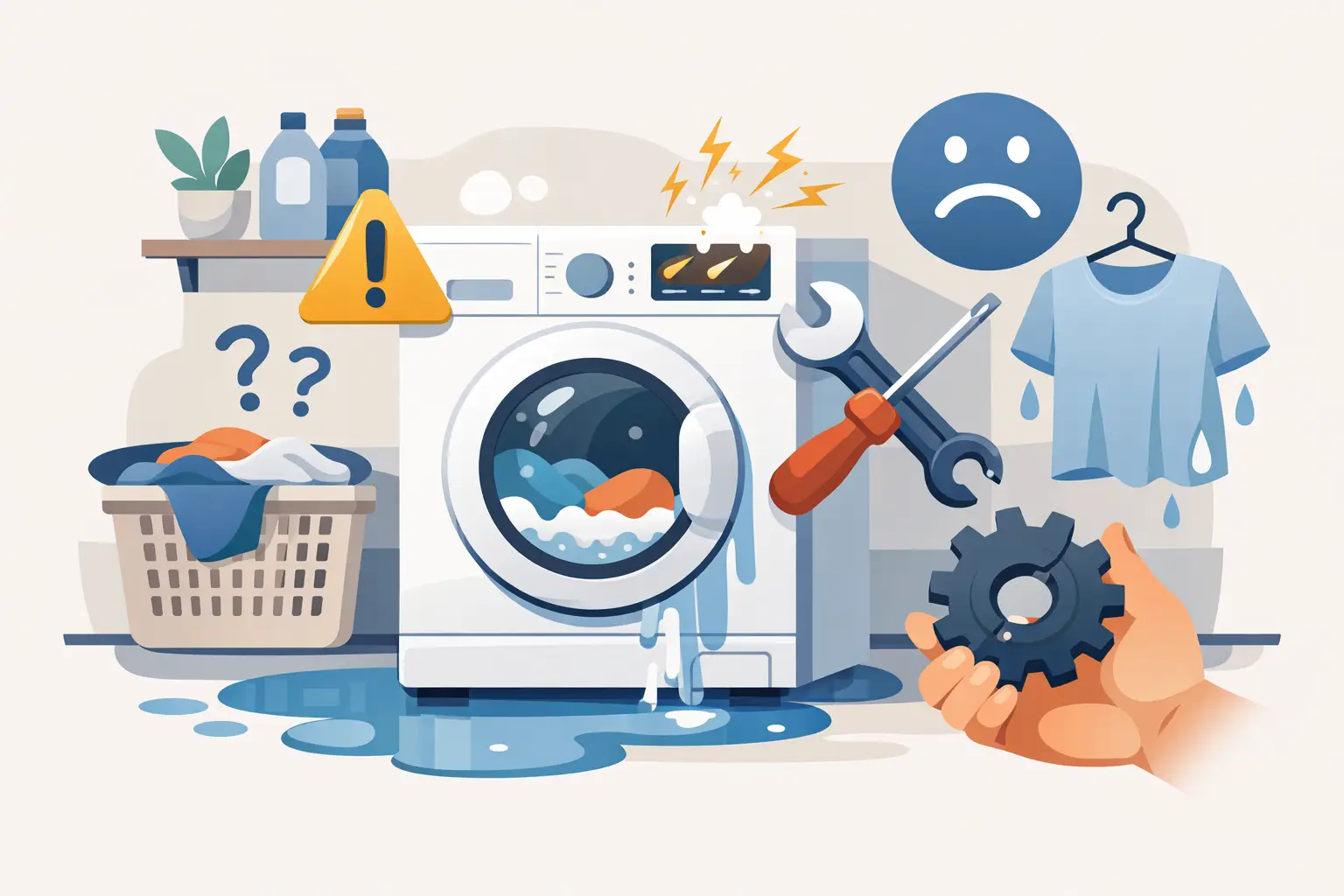
A washer problem rarely starts with a complete breakdown. It often begins with a small puddle, a strange sound during the spin cycle, or clothes that come out wetter than usual. Knowing the top signs your washer needs repair can help you act before a minor issue becomes water damage, a ruined load of laundry, or an unexpected replacement expense.
A washing machine uses water, electricity, moving parts, and sometimes high-speed spinning all at once. That is why repeated problems deserve attention, even if the washer still finishes a cycle. Some issues have simple causes, such as an unbalanced load or a blocked drain filter. Others point to worn internal components that should be diagnosed by a qualified appliance technician.
Top Signs Your Washer Needs Repair
Water is leaking from the washer
Water on the laundry room floor should never be ignored. A leak may come from a loose supply hose, a cracked drain hose, a worn door seal on a front-load washer, or an internal pump problem. It can also happen when the washer is overloading, using too much detergent, or failing to drain correctly.
First, stop the machine and shut off the water supply if the leak is active. Check whether the water appears near the hoses, underneath the washer, or around the door. A little moisture around a front-load door can sometimes be caused by debris caught in the gasket, but a torn or moldy seal will usually need replacement.
Do not keep running a leaking washer to see if it improves. Even a slow leak can damage flooring, baseboards, nearby cabinets, and the ceiling below a second-floor laundry room.
The washer will not drain or spin
If the cycle ends with standing water in the drum or soaking-wet clothing, the washer may have a drainage or spin issue. Common causes include a clogged drain hose, a blocked pump filter, a failing drain pump, or a lid or door lock that is not registering properly.
An unbalanced load can also prevent a washer from reaching full spin speed. Large items such as comforters, bath mats, and towels can shift to one side of the drum. Try redistributing the load and running a spin cycle once more. If the problem keeps happening with normal loads, service is the safer next step.
A washer that cannot drain may not unlock, especially on many front-load models. Avoid forcing the door open. This can damage the latch and create a much larger water cleanup problem.
Loud banging, grinding, or squealing sounds
Washers make normal operating sounds, including water movement, gentle motor noise, and some vibration during spinning. What is not normal is a new, repeated, or unusually loud sound.
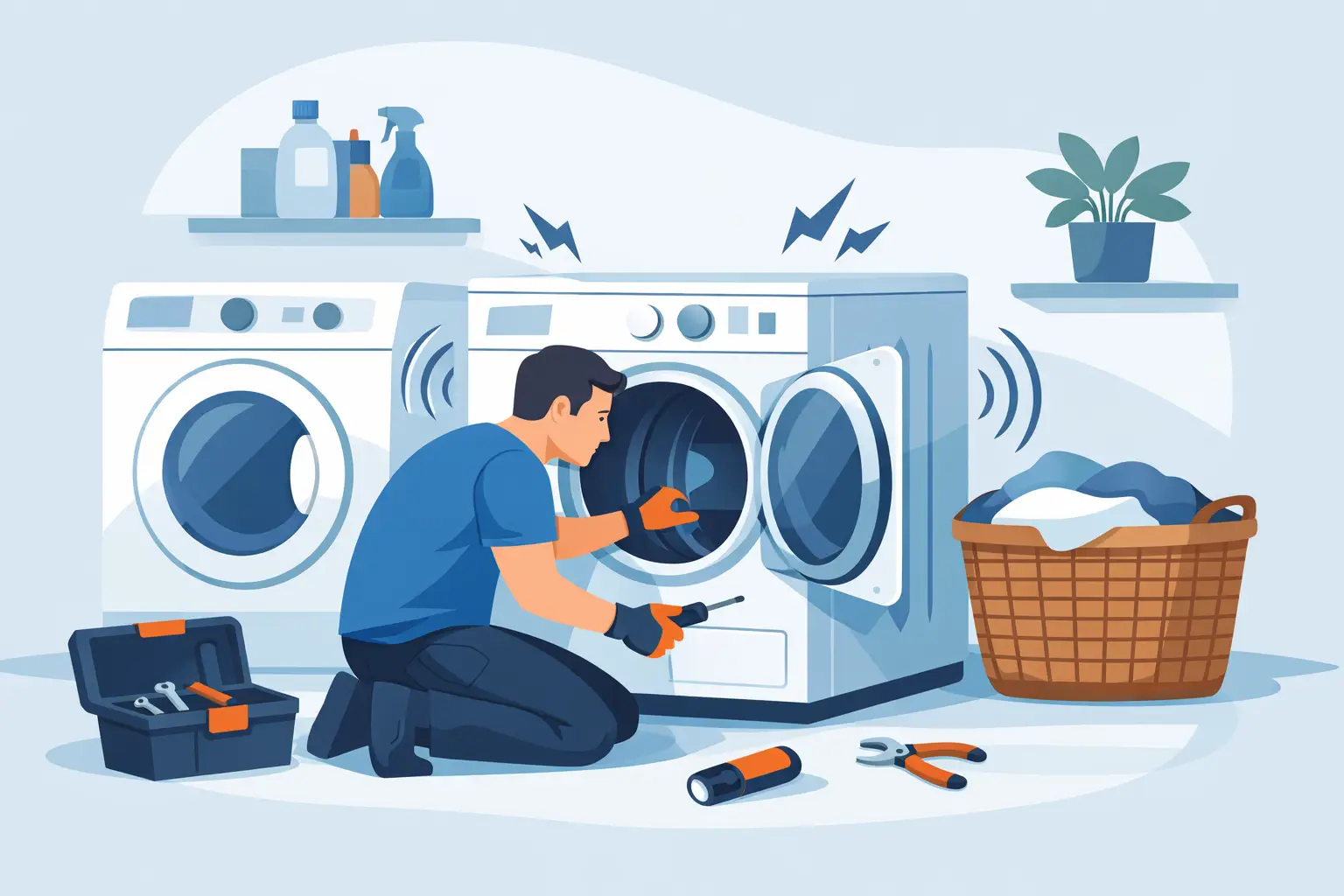
Banging often happens when the washer is not level or when a heavy load becomes unbalanced. Grinding can indicate worn bearings, a damaged drive component, or an object trapped between the inner and outer tubs. Squealing may be related to a belt, motor, or pulley issue, depending on the washer model.
Before calling for service, check that the washer is sitting firmly on the floor and that all four feet are stable. Remove any loose items from pockets, such as coins, keys, or small hardware. If the noise continues after those basic checks, stop using the appliance until it can be inspected. Continued operation can turn a repairable part failure into damage to the drum or motor.
The washer shakes or walks across the floor
A washer should not move across the laundry room during a spin cycle. Severe vibration can loosen hoses, strain internal suspension parts, and damage the appliance over time.
The simplest explanation is that the washer is not level. Adjusting the leveling feet may solve the issue, especially after moving the appliance or installing new flooring. Load size matters as well. Washing one heavy item by itself can create an uneven load that causes aggressive shaking.
If the machine is level, properly loaded, and still shaking hard, worn suspension rods, shock absorbers, springs, or bearings may be responsible. A technician can identify the cause without guessing or replacing parts that are not needed.
It will not start, stops mid-cycle, or shows error codes
A washer that will not power on may have a simple electrical issue, but it can also have a failed control board, door lock, timer, or wiring connection. Confirm that the outlet has power and that the circuit breaker has not tripped. If the machine is plugged into a power strip, move it directly to a properly grounded wall outlet.
When a washer starts but stops in the middle of a cycle, pay attention to when it happens. Stopping before filling, draining, or spinning gives a technician useful clues. Error codes can help too. Write down the exact code rather than repeatedly restarting the washer, which may clear the display without solving the underlying fault.
Never remove panels or attempt electrical repairs while the washer is connected to power. If you smell burning, see smoke, or notice a hot electrical odor, unplug the machine if it is safe to do so and arrange professional service right away.
Clothes are not getting clean
Laundry that comes out with detergent residue, visible soil, or a musty odor may point to more than a detergent problem. Low water flow, a weak agitator, a malfunctioning inlet valve, a clogged filter, or a drainage issue can all affect wash performance.
Start with the basics. Use the correct amount of high-efficiency detergent if your washer requires it, avoid overloading the drum, and select the appropriate cycle for the fabric and soil level. Too much detergent is a common issue because excess suds can prevent proper rinsing and leave residue on clothes.
If you have corrected loading and detergent habits but clothing still comes out poorly washed, a repair visit can determine whether the washer is filling, agitating, heating, and draining as it should.
The door or lid will not lock or open
Modern washers rely on safety locks during operation. A front-load washer may not start if the door is not latching correctly, while a top-load model may not spin if the lid switch is failing.
A blocked latch, damaged strike, worn lock assembly, or electronic control issue can cause this problem. Do not slam the door or lid to make it work. That can break the latch completely and may make it harder to remove laundry from the washer.
If a door remains locked after the cycle has ended, wait a few minutes and check whether there is water still in the drum. A washer that detects standing water may keep the door locked as a safety measure. If it remains locked, professional diagnosis is the best way to protect both the appliance and your flooring.
Safe Checks Before You Schedule Washer Repair
A few careful checks can rule out simple problems and help your service appointment go more smoothly. Always unplug the washer before inspecting hoses, filters, or anything behind the appliance. Turn off the water valves if there is a leak.
Before booking service, you can safely check:
- Whether the machine is level and the load is balanced
- Whether the water supply valves are fully open and hoses are not kinked
- Whether the drain hose is crushed, blocked, or pushed too far into the standpipe
- Whether a drain filter, if accessible on your model, contains lint, coins, or debris
Avoid dismantling the cabinet, bypassing a lid switch, or trying to repair internal wiring. Those shortcuts can create safety risks and may make the original problem worse.
When a Repair Is Worth It
Repair is often the practical choice when a washer has a localized issue, such as a pump, hose, belt, door lock, inlet valve, or suspension component. Replacing a single failed part can restore dependable performance and cost far less than purchasing and installing a new machine.
The decision depends on the washer’s age, condition, repair history, and the severity of the failure. If an older appliance needs a major tub, bearing, or control-board repair, replacement may be worth considering. A qualified technician can explain the likely repair, identify any safety concerns, and give you clear information to make the right decision for your home or business.
Protect Your Home With Prompt Service
Waiting for a washer to fail completely can leave you without laundry access at the worst possible time. More importantly, leaks, electrical odors, and severe vibration can put your property at risk. Appliance Tech Pros provides professional washer troubleshooting and repair focused on safe workmanship, dependable results, and clear next steps.
If your washer is leaking, refusing to drain, making alarming noises, or leaving clothes soaked, arrange service before the problem grows. A timely repair can help protect your home, keep laundry moving, and give you the peace of mind that the appliance is working the way it should.