A walk-in refrigerator that will not hold temperature, a range that will not ignite, or a dryer that stops mid-cycle can disrupt far more than a single task. For a café, rental property, salon, office kitchen, or shared laundry space, a prompt commercial appliance repair service protects inventory, customer experience, staff productivity, and day-to-day revenue.
The right response is not always to replace the machine at the first sign of trouble. Many commercial and heavy-use household appliances can be repaired safely and cost-effectively when a qualified technician diagnoses the actual cause. The key is knowing when to call, what information to provide, and when an appliance should be taken out of service immediately.
When a Commercial Appliance Repair Service Is the Right Call
Commercial operators often put appliances through more cycles, longer run times, and heavier loads than a typical home. That extra demand can expose worn components quickly. A minor issue may also become an urgent problem when it affects food storage, sanitation, laundry turnover, or a tenant’s basic comfort.
Call for professional service when an appliance has stopped working, is performing inconsistently, or is showing signs of a safety concern. Refrigerators that run constantly, dishwashers that leave standing water, washers that leak, and ovens with uneven heat are all worth addressing before the problem expands.
A repair visit is especially valuable when the appliance is still relatively modern, has otherwise been dependable, or serves an essential function in your operation. Replacing equipment can involve delivery delays, installation costs, electrical or gas connection requirements, and unexpected changes to your workflow. A targeted repair may restore dependable operation faster and at a lower cost.
That said, repair is not always the best investment. If a unit has repeated major failures, needs an expensive sealed-system repair, lacks available replacement parts, or is near the end of its expected service life, a technician can help you compare the repair cost with replacement. A trustworthy recommendation should account for safety, operating condition, expected reliability, and your business needs – not just whether a part can be replaced.
Signs You Should Stop Using the Appliance
Some appliance problems can wait for a scheduled appointment. Others require immediate action to protect people and property.
Turn off and stop using an appliance if you smell gas, notice burning odors, see smoke, experience repeated tripped breakers, find exposed wiring, or hear unusual sparking or buzzing. Do not try to relight or repair a gas appliance yourself. Leave the area if there is a strong gas odor, follow your local emergency procedures, and contact the appropriate gas utility or emergency service before arranging repair.
Water leaks also deserve quick attention. A slow drip under a dishwasher, refrigerator, or washing machine can damage flooring and cabinets, create slip hazards, and encourage mold growth. Shut off the water supply if it is safe to do so, move nearby items away from the leak, and avoid running another cycle until the cause is identified.
For refrigeration equipment, temperature is the priority. If food or temperature-sensitive products cannot be held at a safe temperature, move them to working storage as quickly as possible. Avoid repeatedly opening the door while you wait, since that makes the unit work harder and can speed up temperature loss.
Common Problems That Need Professional Troubleshooting
Refrigerators and Freezers
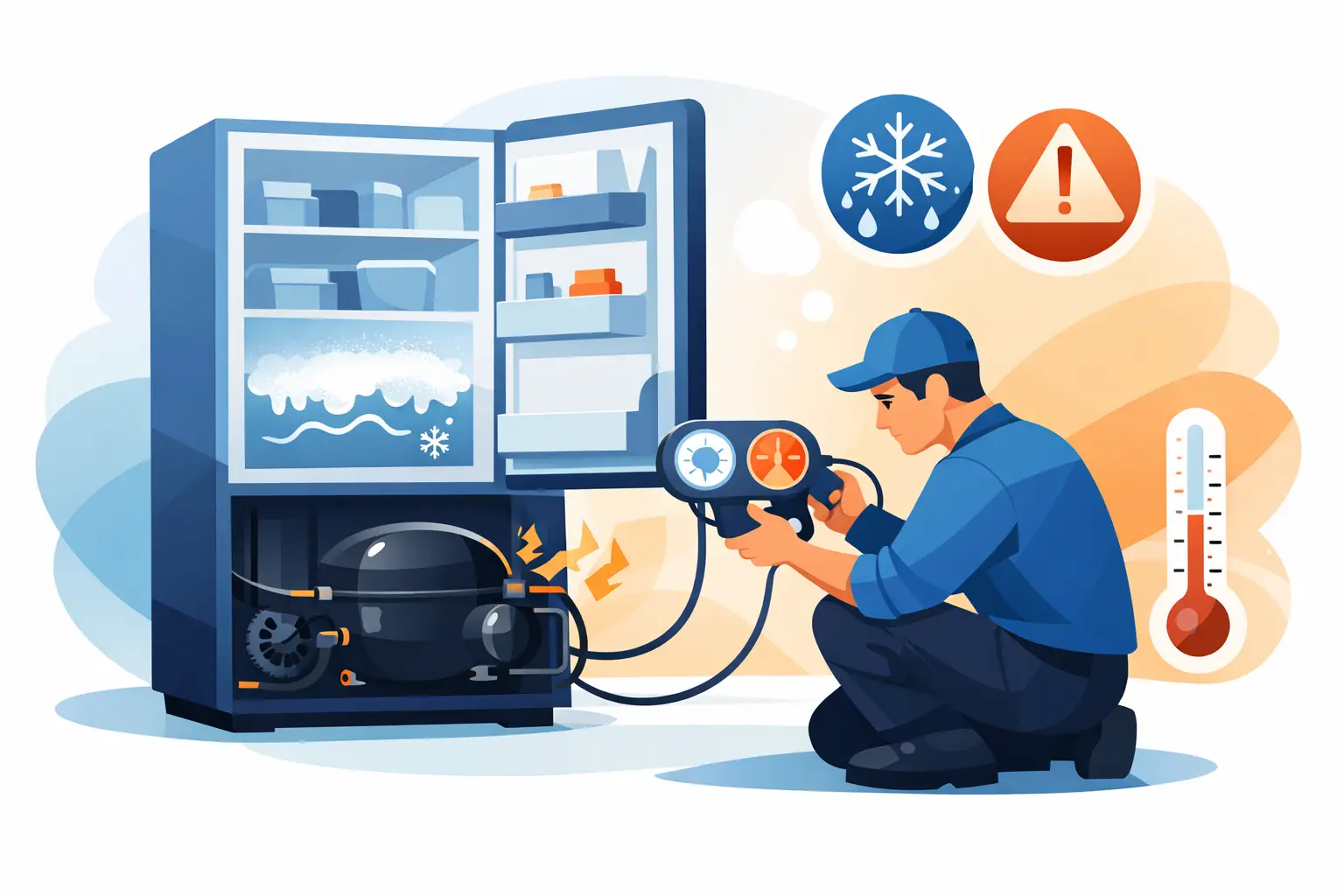
A refrigerator may seem to be working because its lights are on, while the cooling system is struggling in the background. Warning signs include warm compartments, frost buildup, water beneath the unit, loud fan noises, a constantly running compressor, or ice production that suddenly slows down.
The cause could be as simple as a damaged door gasket or dirty condenser area. It could also involve a fan motor, defrost component, control board, sensor, compressor relay, or sealed-system issue. Accurate diagnosis matters because replacing parts based on guesswork can waste time and money. For commercial food storage, a technician should also verify that the appliance reaches and maintains the proper temperature after the repair.
Ovens, Stoves, and Gas Ranges
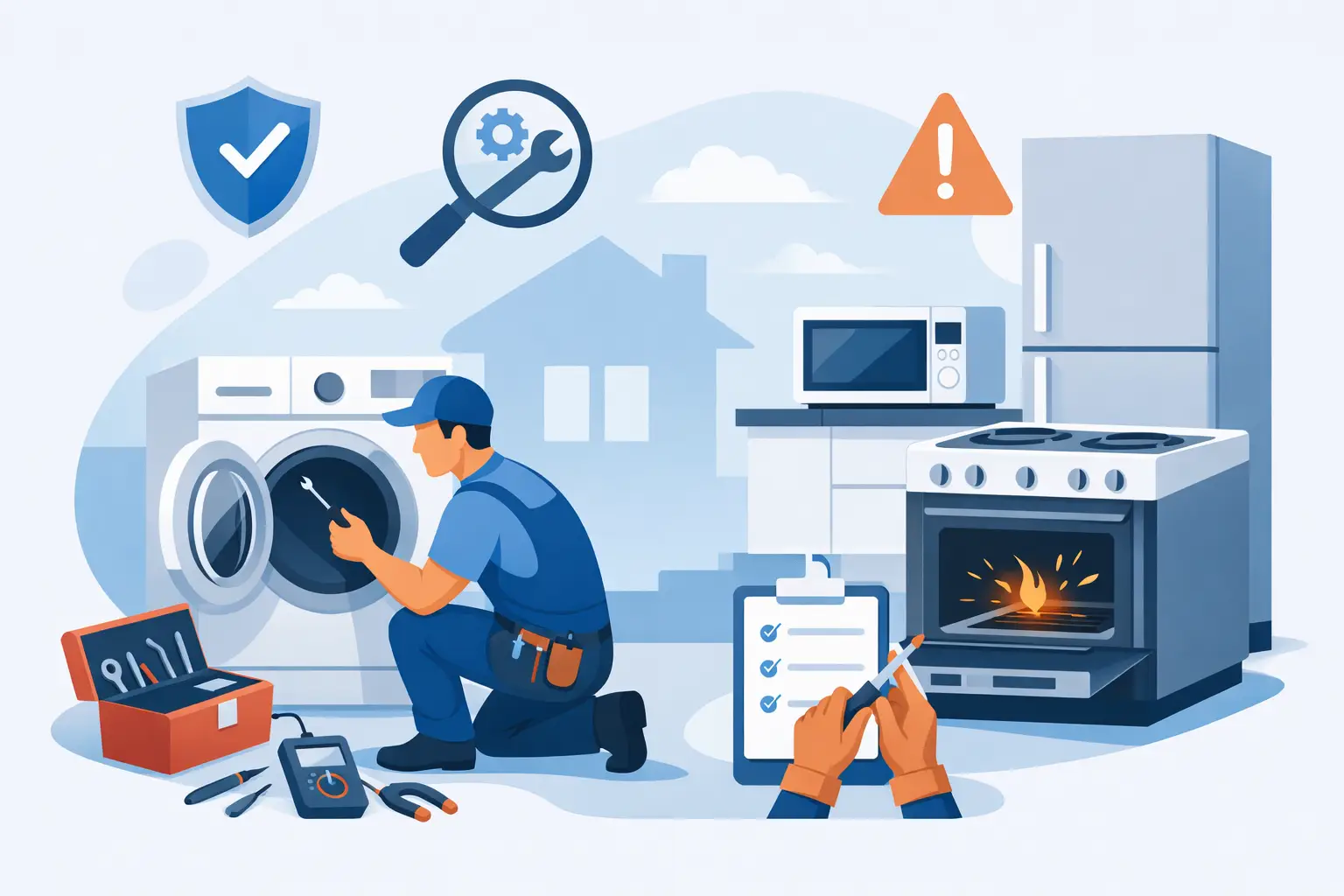
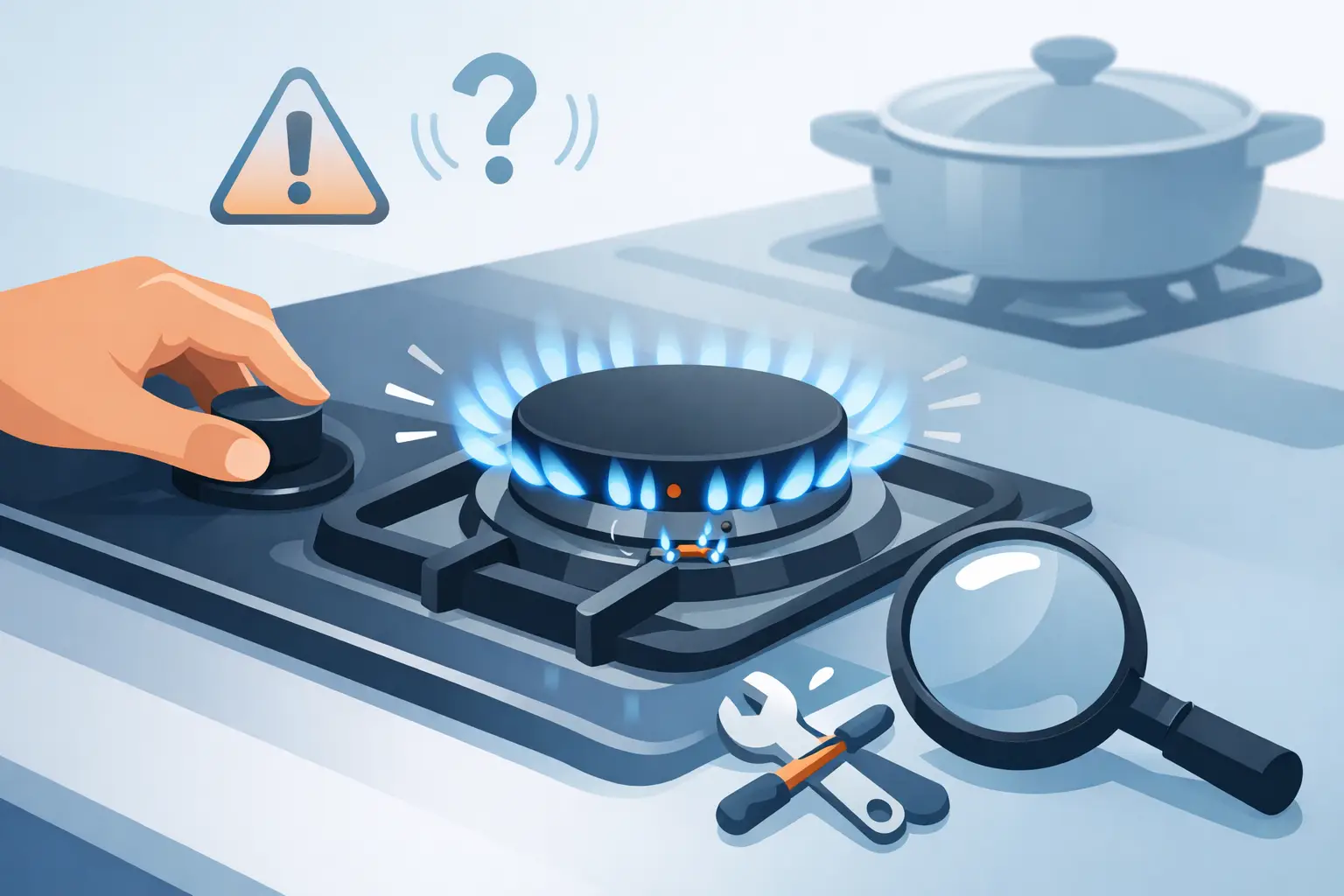
Cooking equipment needs both performance and safety checks. Uneven baking, burners that click continuously, a weak flame, delayed ignition, error codes, or an oven that overheats can all interfere with service. With gas appliances, ignition and combustion concerns should always be handled by a qualified professional.
A technician can inspect igniters, burner components, temperature sensors, control systems, wiring, and gas-related connections as appropriate. The goal is not simply to get heat back. It is to make sure the appliance operates predictably and safely for the people using it every day.
Dishwashers, Washing Machines, and Dryers
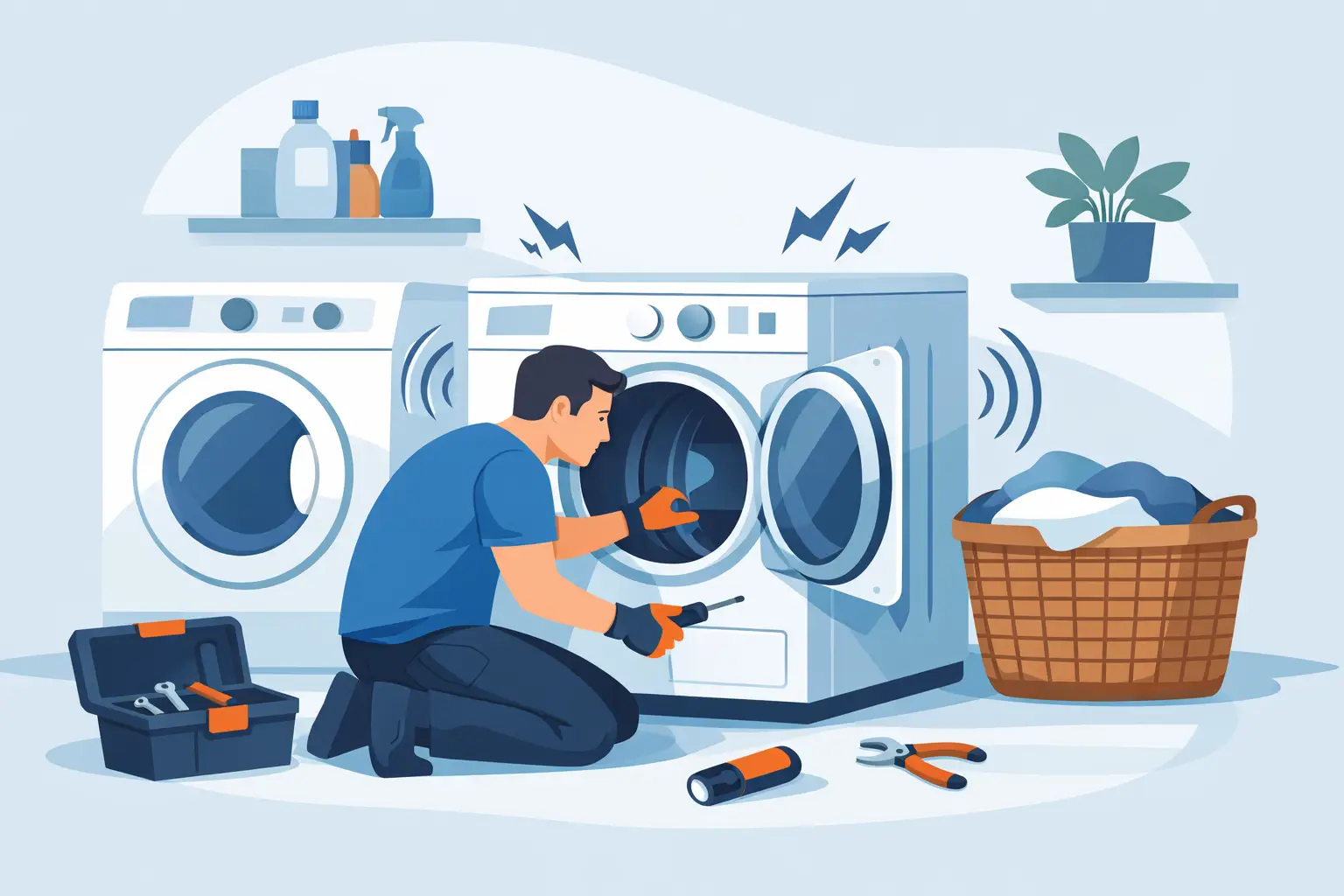
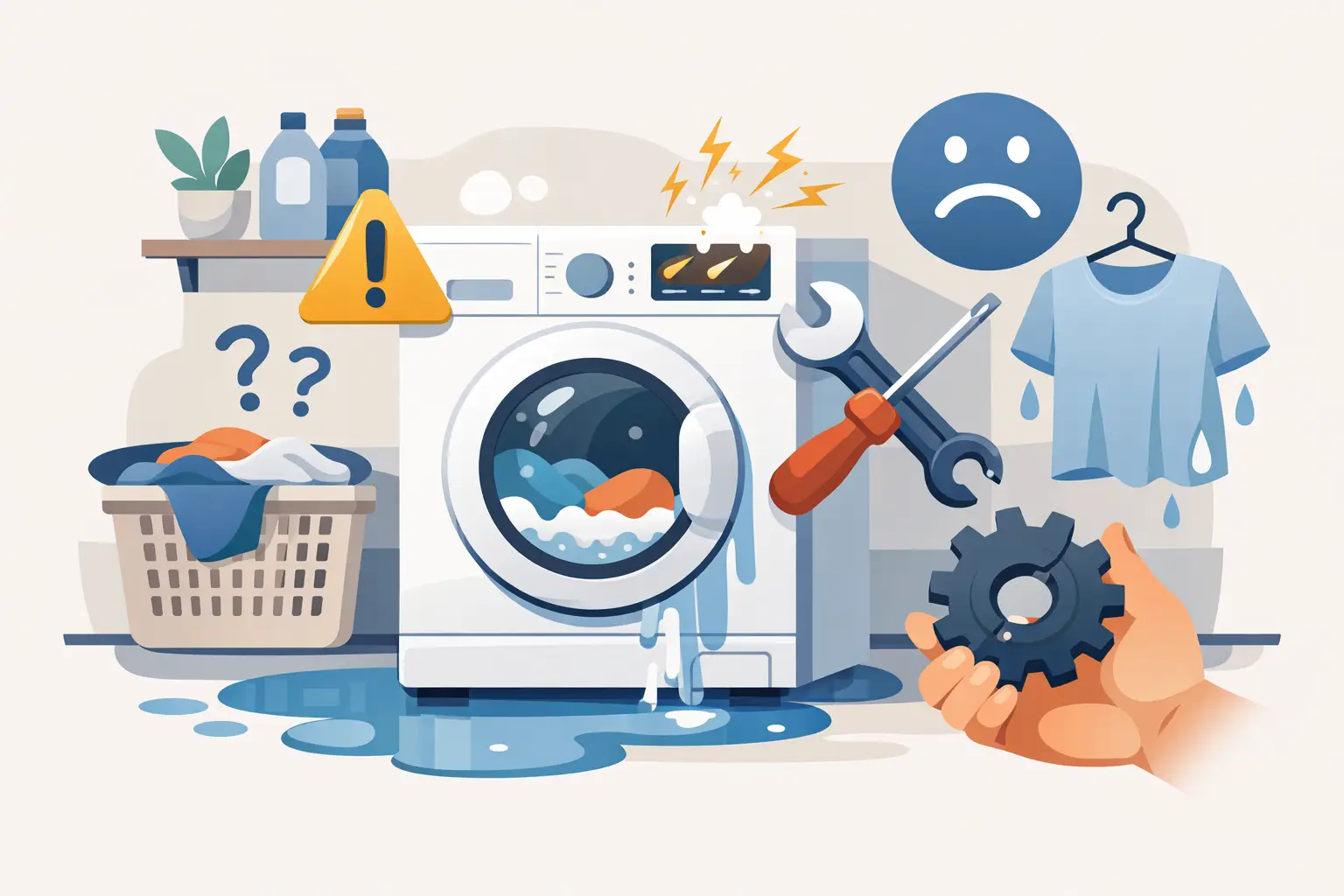
In high-use settings, laundry and cleaning equipment often fails through drainage restrictions, worn door seals, faulty pumps, heating issues, drive components, or control problems. A dishwasher that does not drain fully can affect sanitation. A washer that will not spin can delay turnover. A dryer that takes multiple cycles to dry can raise energy use and put extra strain on the appliance.
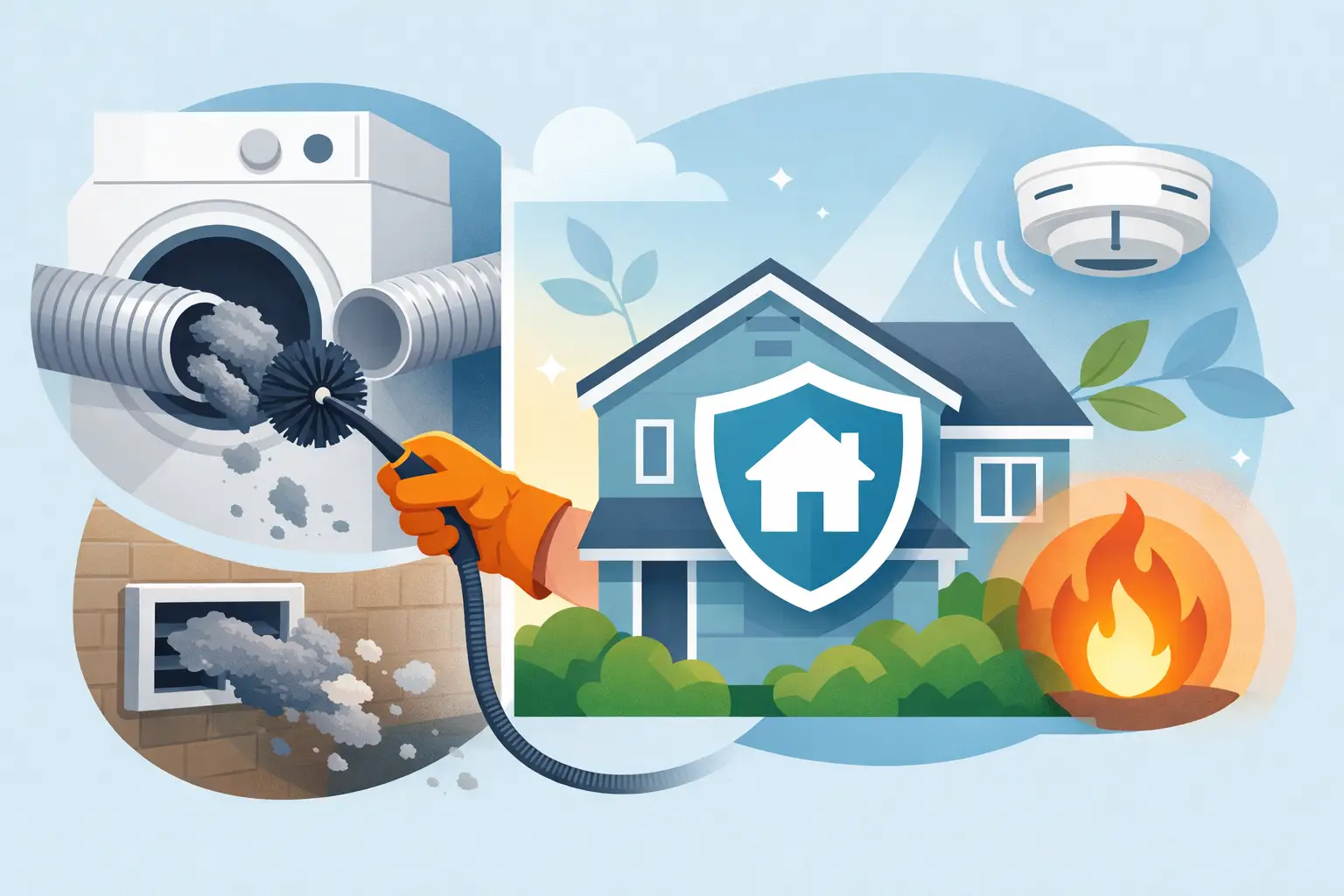
Dryer problems also require attention to airflow. Lint buildup in the venting path can reduce performance and create a fire risk. Cleaning the lint screen after every load helps, but it does not replace periodic inspection of the full vent system and the dryer itself.
What to Do Before the Technician Arrives
A little preparation can make a service visit more efficient. Note the appliance brand and model number, when the issue began, any error code displayed, and what happens when you try to run the unit. If the problem is intermittent, explain what seems to trigger it, such as a heavy load, a particular cycle, or a period of extended use.
Clear a safe path to the appliance and remove stored items from the immediate work area. For refrigerators, keep food organized so the technician can access panels without unnecessary delays. For washers, dryers, dishwashers, and ranges, avoid pulling the appliance away from the wall if doing so could strain a gas line, water connection, drain hose, or power cord.
If your business has operating hours that make access difficult, mention that when booking. A service provider can better plan the visit when they understand whether the appliance is in a customer-facing area, a shared building space, or a busy back-of-house environment.
How Maintenance Reduces Unexpected Downtime
Preventive care will not eliminate every breakdown, but it can catch conditions that shorten appliance life. The best maintenance schedule depends on the type of equipment, how heavily it is used, and the environment around it. A dryer in a shared laundry room needs more frequent attention than one used occasionally, while a refrigerator in a hot, crowded kitchen may need more regular cleaning and airflow checks.
Train staff to report small changes early. A new noise, a loose door seal, longer drying time, inconsistent temperatures, or a small leak may seem manageable until it interrupts operations. Early service is often simpler than an emergency repair after a complete failure.
Basic care also supports better performance. Keep refrigerator vents clear, clean accessible filters according to manufacturer guidance, avoid overloading washers and dryers, check appliance doors for a secure seal, and use the correct detergent or cleaning products for the machine. These steps cannot replace professional diagnosis, but they help equipment operate under less strain.
Choosing a Service Provider You Can Trust
Commercial appliance work calls for more than a quick part swap. Look for a service company that can troubleshoot across major kitchen and laundry appliances, explain the issue in clear terms, and provide a practical repair recommendation. Fast scheduling matters, but so do proper safety practices, qualified gas appliance experience when applicable, and workmanship that is backed by a warranty.
Ask whether the technician will diagnose the problem before recommending a repair, whether pricing is explained clearly, and whether the company services the appliance type and brand you own. For property managers and small business operators, it also helps to work with a provider that respects access requirements, keeps the work area orderly, and understands that downtime has a real cost.
Appliance Tech Pros provides professional support for major kitchen and laundry appliances, with safety-focused troubleshooting and convenient service designed to get essential equipment working again. When a machine affects your operation, timely expert help can prevent a small disruption from becoming a costly interruption.
If an appliance is showing warning signs, do not wait until the busiest part of the day to find out it has failed. Schedule service while the issue is still manageable, and give your equipment the best chance to keep supporting the people who rely on it.