A warm refrigerator usually gets noticed at the worst possible moment – after a grocery run, before guests arrive, or when you open the door and realize the milk is no longer cold. If you are searching for refrigerator not cooling repair, the goal is not just to get cold air back. It is to protect your food, avoid bigger damage, and restore a major appliance quickly and safely.
Some cooling problems are simple. Others point to failing electrical parts, airflow issues, sealed system trouble, or a compressor problem that needs professional service. The key is knowing what you can check yourself and what should not wait.
What refrigerator not cooling repair usually involves
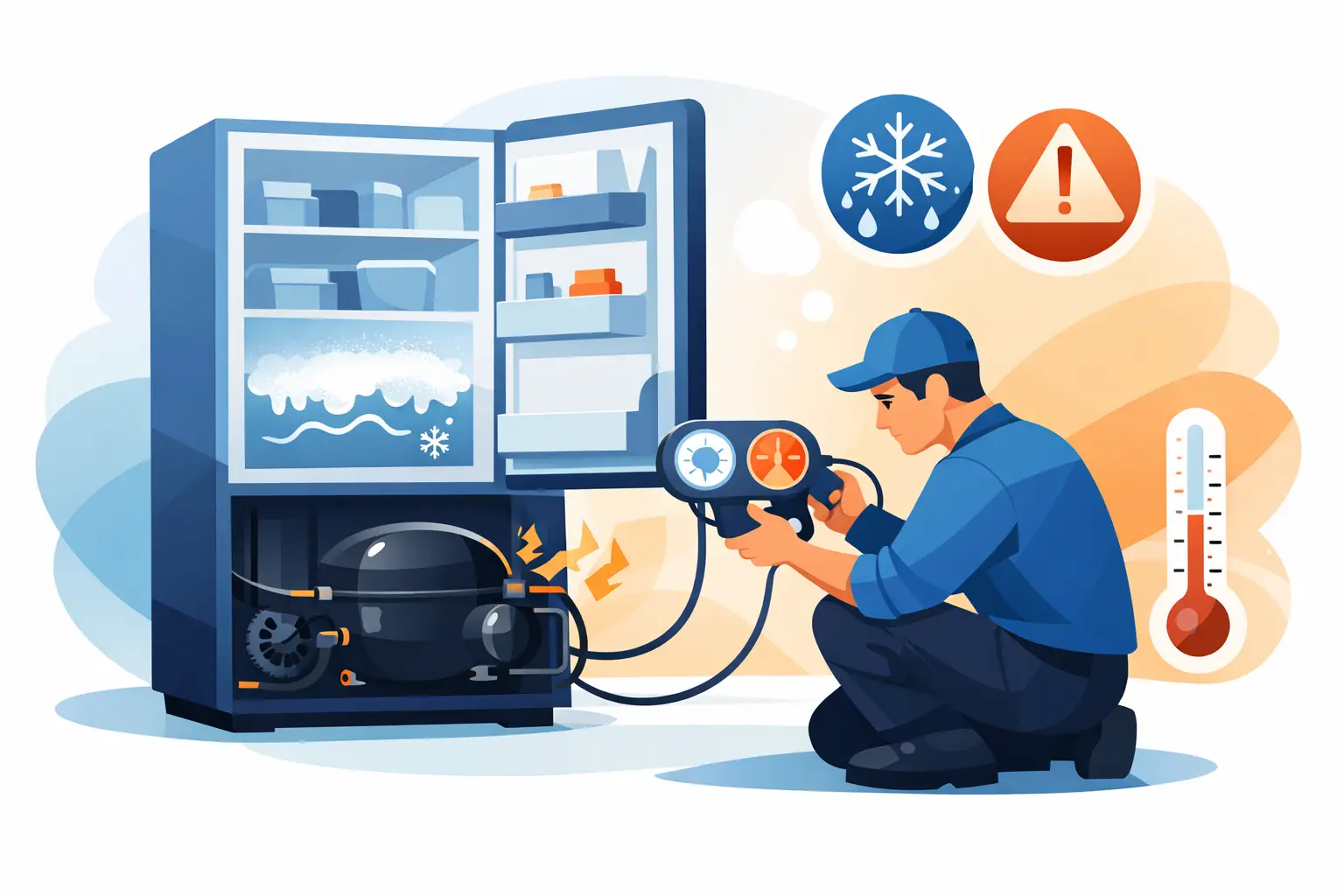
When a refrigerator stops cooling properly, the problem is rarely random. Most failures fall into a few categories: restricted airflow, dirty condenser coils, faulty door sealing, thermostat or control issues, evaporator fan problems, condenser fan failure, defrost system faults, or compressor-related trouble.
That matters because the right repair depends on the actual cause. A refrigerator that runs constantly but stays warm points to a different issue than one that is completely silent. A freezer that still works while the fresh food section warms up tells a different story too. Good diagnosis saves time, money, and unnecessary parts replacement.
First signs your refrigerator is not cooling properly
Not every failure starts with food turning warm overnight. Often, there are smaller warning signs first. You may notice longer run times, weak airflow from interior vents, frost buildup on the back panel, water under drawers, a hotter-than-normal cabinet exterior, or unusual clicking and buzzing.
In some homes, the freezer stays somewhat cold while the refrigerator section rises into unsafe temperatures. In others, both compartments warm up together. If temperatures are creeping upward, it is best to act early. Waiting can turn a manageable service call into spoiled food, melted ice, and strain on expensive components.
Safe checks you can do before booking service
There are a few practical things worth checking before scheduling refrigerator not cooling repair. Start with the power supply. Make sure the unit is plugged in securely and that the breaker has not tripped. If interior lights work, that does not always mean the whole system is operating normally, but it is a useful first check.
Next, confirm the temperature settings. Controls can be bumped accidentally, especially in busy family kitchens or shared spaces. If the refrigerator was set too warm, give it several hours after adjusting before judging the result.
Then check airflow. Refrigerators need room to breathe. If the vents inside are blocked by large containers or overpacked shelves, cold air may not circulate properly. The same goes for the exterior. If the unit is pushed too tightly against the wall or boxed in by clutter, heat may not dissipate as it should.
Door sealing is another easy place to look. A torn, dirty, or loose gasket lets warm air enter constantly. That can create condensation, temperature swings, and excess frost. If the door does not close fully or seems to pop open slightly, the seal or door alignment may be part of the problem.
Finally, inspect the condenser coils if they are accessible. Dust, pet hair, and kitchen debris can coat the coils and reduce cooling performance. Cleaning them carefully can sometimes help, especially if the issue has been building over time. If you smell burning, hear loud grinding, or see signs of damaged wiring, stop there and arrange professional service.
When the freezer is cold but the refrigerator is warm
This is one of the most common service calls. In many refrigerators, the freezer creates the cold air and a fan moves part of that air into the fresh food compartment. If the refrigerator section is warm while the freezer still seems cold, the issue is often airflow-related.
A failing evaporator fan motor is a common cause. If that fan stops working, cold air does not circulate where it needs to go. Frost buildup from a defrost system failure can also block vents and trap cold air in the wrong place. Sometimes a damaged damper control prevents the proper amount of cold air from entering the refrigerator section.
This kind of problem can look minor at first, but it tends to get worse. By the time produce drawers feel warm, food safety is already a concern.
Common parts that fail in a no-cooling situation
Several components can be involved in a refrigerator not cooling repair, and each one changes the repair approach.
Condenser fan motors help remove heat from the system. If the fan is not spinning, the refrigerator may run hot and cool poorly. Evaporator fan motors move cold air through the compartments. When they fail, temperatures become uneven or rise quickly.
Defrost heaters, thermostats, and control boards can also cause cooling loss. If the refrigerator cannot defrost properly, ice can build up around the evaporator coil and choke off airflow. Thermistors and temperature sensors may send inaccurate readings, causing the unit to cool at the wrong times or not enough.
Then there is the compressor and sealed system. This is where things become more technical and more urgent. A weak compressor, refrigerant leak, or sealed system restriction can stop cooling almost entirely. These repairs are not do-it-yourself tasks. They require trained handling, proper tools, and accurate diagnosis.
Why DIY repair is not always the cheaper option
It is understandable to want a quick fix. But refrigerators combine electricity, moving components, and in some cases pressurized refrigerant systems. Replacing parts based on guesswork can get expensive fast, especially when online symptoms overlap.
For example, a warm refrigerator might be caused by dirty coils, a failed fan, a control issue, or a compressor problem. Swapping one part without testing the system can waste time and money. There is also the risk of damaging panels, wiring, or sealed components while trying to access internal parts.
For homeowners and small business operators, the real cost is often downtime. Food loss, repeated store trips, and interrupted routines add up quickly. Professional diagnosis usually shortens the path to a reliable repair.
When to call for professional refrigerator not cooling repair
Some signs should move the problem out of the DIY category right away. If the refrigerator is warm in both sections, if the compressor clicks repeatedly but does not start, if you hear loud fan noise or smell overheating, or if there is heavy frost behind interior panels, it is time to have it checked.
The same applies if cleaning the coils and checking the settings do not change anything within a reasonable window. A trained technician can test electrical components, airflow, fan operation, control systems, and sealed system performance without guesswork.
For households with children, seniors, or a busy weekly grocery schedule, speed matters. The longer cooling problems continue, the more likely it is that food will need to be discarded and the appliance will be put under added stress.
What to expect from a service visit
A proper service call should start with diagnosis, not assumptions. The technician should inspect temperatures, listen to operating sounds, check fans and controls, examine frost patterns, and test likely failure points. From there, you should get a clear explanation of the problem, the recommended repair, and whether the issue is cost-effective to fix.
That last point matters. Not every refrigerator should be repaired, especially if there is major sealed system damage on an older unit. Honest service means helping you weigh the appliance age, repair cost, and expected reliability after the fix.
For many common problems, though, repair is the smarter option. A failed fan motor, thermostat issue, door gasket problem, or defrost component can often be resolved without replacing the entire appliance. Companies such as Appliance Tech Pros focus on getting that diagnosis right so customers can make informed decisions quickly.
How to reduce the chances of future cooling problems
No refrigerator lasts forever, but regular care helps. Keep the coils clean, avoid overpacking the compartments, and make sure the door seals stay clean and intact. Leave enough space around the appliance for ventilation, and do not ignore early signs like inconsistent temperature, frost buildup, or unusual sounds.
It also helps to act quickly when something changes. Refrigerators rarely fix themselves. A small airflow issue today can become a motor or compressor strain problem later.
If your refrigerator is not keeping food cold, trust what you are seeing. Fast action protects your groceries, your schedule, and the appliance itself. The best repair is not always the one that sounds simplest – it is the one that solves the actual problem safely and restores your peace of mind.