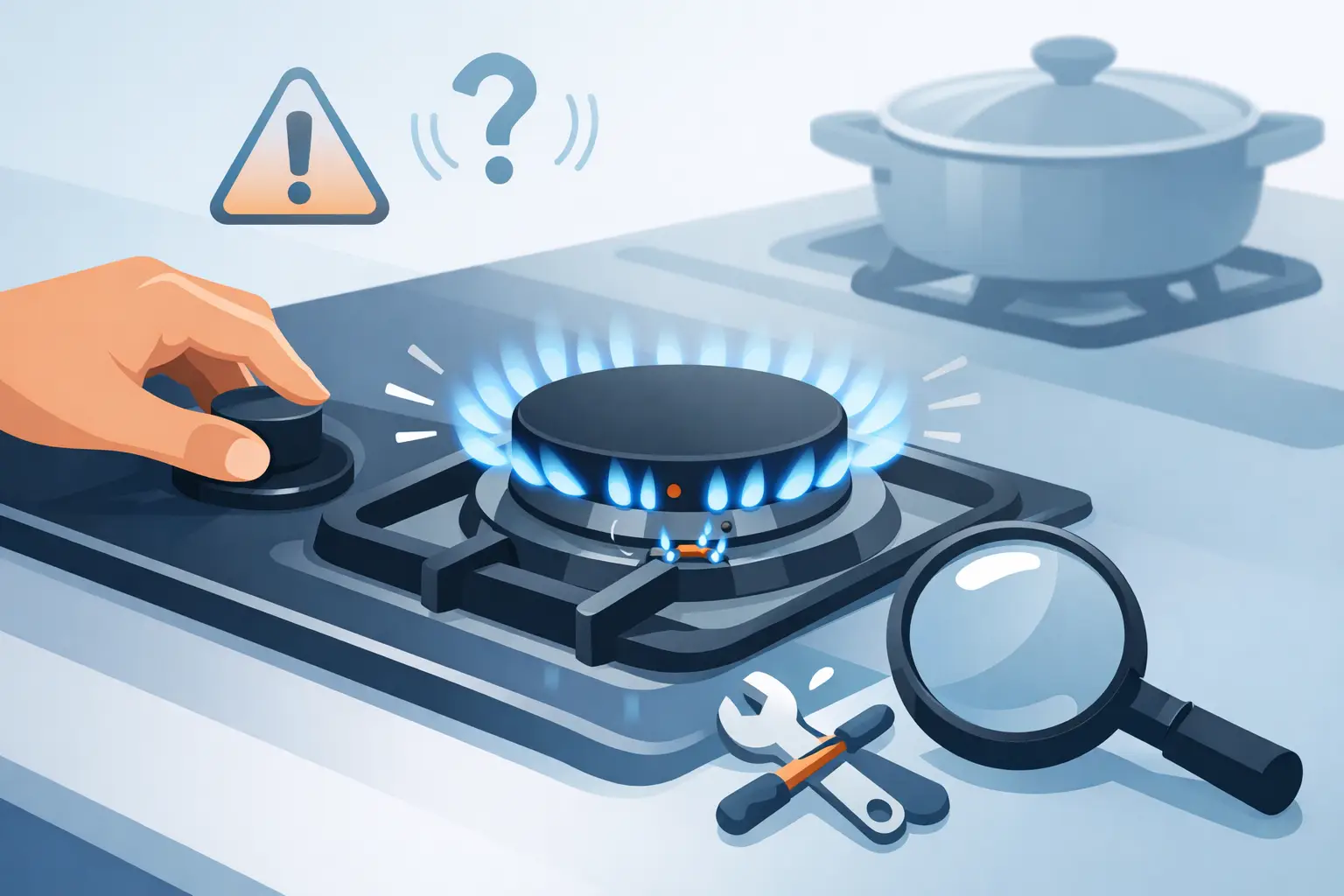
A gas odor in the kitchen right after cleaning an oven can turn a routine chore into a safety concern quickly. An oven gas smell after cleaning is sometimes caused by cleaning residue burning off or a burner that did not relight properly. It can also signal a gas leak, which is never something to troubleshoot by trial and error.
The safest response depends on how strong the odor is, whether you hear gas escaping, and whether the smell goes away promptly. If the odor is strong, persistent, or accompanied by a hissing sound, treat it as a possible leak first.
What to Do if You Smell Gas From Your Oven
If you smell a strong sulfur-like or rotten-egg odor, turn off the oven only if you can do so without risk. Do not light a match, smoke, use a lighter, or operate electrical switches. Avoid plugging in appliances, turning on a range hood, or using a phone while you are in the affected area.
Leave the home with everyone inside, including pets. Once you are safely outside and away from the building, call 911, your gas utility’s emergency number, or a licensed gas professional. Do not return to use the appliance until the source has been inspected and cleared.
A faint smell that appears only for a moment as the oven ignites can be different. Modern gas ovens may release a brief trace of gas before the igniter lights the burner. That smell should disappear within seconds. If it continues, becomes stronger, or returns whenever the oven runs, stop using the appliance and arrange professional service.
Why an Oven Gas Smell After Cleaning Can Happen
Cleaning can affect parts of a gas oven that normally operate without much attention. The cause may be simple, but it is still worth addressing before the next meal or busy service period.
Cleaner residue is burning off
Oven cleaners, degreasers, baking soda mixtures, and even excess water can leave residue inside the oven cavity. When the oven heats up, that residue may produce a sharp chemical smell, smoke, or fumes that people sometimes mistake for natural gas.
This odor is more likely if cleaner was sprayed near the bottom burner area, around openings in the oven floor, or along the door gasket. The smell may improve after the oven is thoroughly wiped with clean water and aired out. Chemical fumes are not the same as a gas leak, but they can still irritate your eyes, throat, or lungs. Ventilate the kitchen and do not use the oven until residue has been removed.
Moisture or debris is affecting burner ignition
Many gas ovens use an igniter to open the gas valve and light the bake burner. If water, foam, or loosened debris reaches the burner area during cleaning, ignition can be delayed. Gas may be released briefly before the burner lights, creating a noticeable odor.
A delayed ignition can also produce a small “whoosh” when the flame finally catches. That is not a condition to ignore. Continued use can worsen the problem and may lead to uneven heating, burner damage, or a larger ignition event.
Burner openings may be blocked
Food debris, cleaning paste, and residue can clog small burner ports. On a gas range, blocked surface burner ports can prevent an even flame. In an oven, debris near the bake burner or flame spreader can interfere with proper ignition and combustion.
Do not poke at burner openings with sharp tools or disassemble gas components without the proper training. A technician can safely inspect the burner, igniter, gas valve, and airflow paths, then clean or replace the affected part if needed.
An older oven pilot light went out
Some older gas ovens use a standing pilot light rather than an electronic igniter. Cleaning around the bottom of the oven may extinguish that pilot or affect its flame. If gas is present but the pilot is not lighting correctly, the appliance needs careful inspection before it is relit.
Follow the manufacturer’s instructions only if they are clear, the gas smell is gone, and you are confident there is no leak. If there is any uncertainty, leave the appliance off and call a qualified gas appliance technician.
A gas connection or internal component has failed
Cleaning does not usually cause a gas leak by itself, but moving a range to clean behind it can strain a flexible gas connector. An aging valve, loose fitting, damaged connector, or faulty oven safety valve can also begin leaking around the same time by coincidence.
Never assume the cleaning caused the problem or that the smell will resolve on its own. A recurring gas odor needs a professional diagnosis.
How to Tell Gas Odor From Cleaning Fumes
Natural gas has an added odorant that is commonly described as sulfur-like, rotten egg-like, or similar to cabbage. It is designed to be noticeable. Cleaning fumes are often more chemical, perfumed, acrid, or smoky, especially when the oven is heating.
The distinction is not always obvious in a kitchen that has just been cleaned. That is why the safest rule is simple: if you suspect gas, act as though it is gas until a qualified person confirms otherwise.
You should stop using the oven and seek service if the smell lasts more than a few seconds after ignition, occurs while the oven is off, appears near the gas shutoff valve or behind the range, or is paired with weak flames, clicking, delayed ignition, soot, or uneven baking. These signs point beyond normal burn-off from cleaning products.
Safe Steps Before Using the Oven Again
After a mild, short-lived odor that clearly seems related to cleaner residue, make sure the oven is completely cool. Wipe interior surfaces again with a clean damp cloth, then dry them thoroughly. Remove any visible baking soda paste, foaming cleaner, or pooled moisture, especially near the oven floor and burner cover.
Open windows and provide fresh air before testing the appliance. If your oven has a self-clean setting, do not run it to “burn away” a gas smell. Self-cleaning temperatures are extremely high and can intensify fumes, damage components, or create more confusion about the source of the odor.
When you test the oven, stay nearby and watch for normal ignition. The burner should light without a long delay, a pop, or a lingering gas odor. If anything seems unusual, turn the oven off and schedule a repair visit instead of trying repeated ignition cycles.
Do not use a flame to check for leaks. Do not spray cleaners, water, or homemade soap solutions onto internal gas components. While a technician may use approved leak-detection methods, gas safety testing requires the right tools, access, and experience.
When Professional Oven Repair Is the Right Call
Gas ovens are reliable appliances, but their safety systems need to work correctly every time. A professional inspection can identify whether the issue is residue on the burner, a failing igniter, a blocked port, improper gas pressure, a leaking fitting, or a worn valve.
For homeowners and small commercial kitchens, prompt service also prevents a minor concern from becoming an unexpected cooking disruption. Appliance Tech Pros can inspect gas oven operation, identify the source of an odor, and complete repairs with a safety-first approach.
Keep the kitchen ventilated, trust your sense of smell, and do not take chances with a recurring gas odor. A properly operating oven should let you cook with confidence, not leave you wondering whether it is safe to turn on.