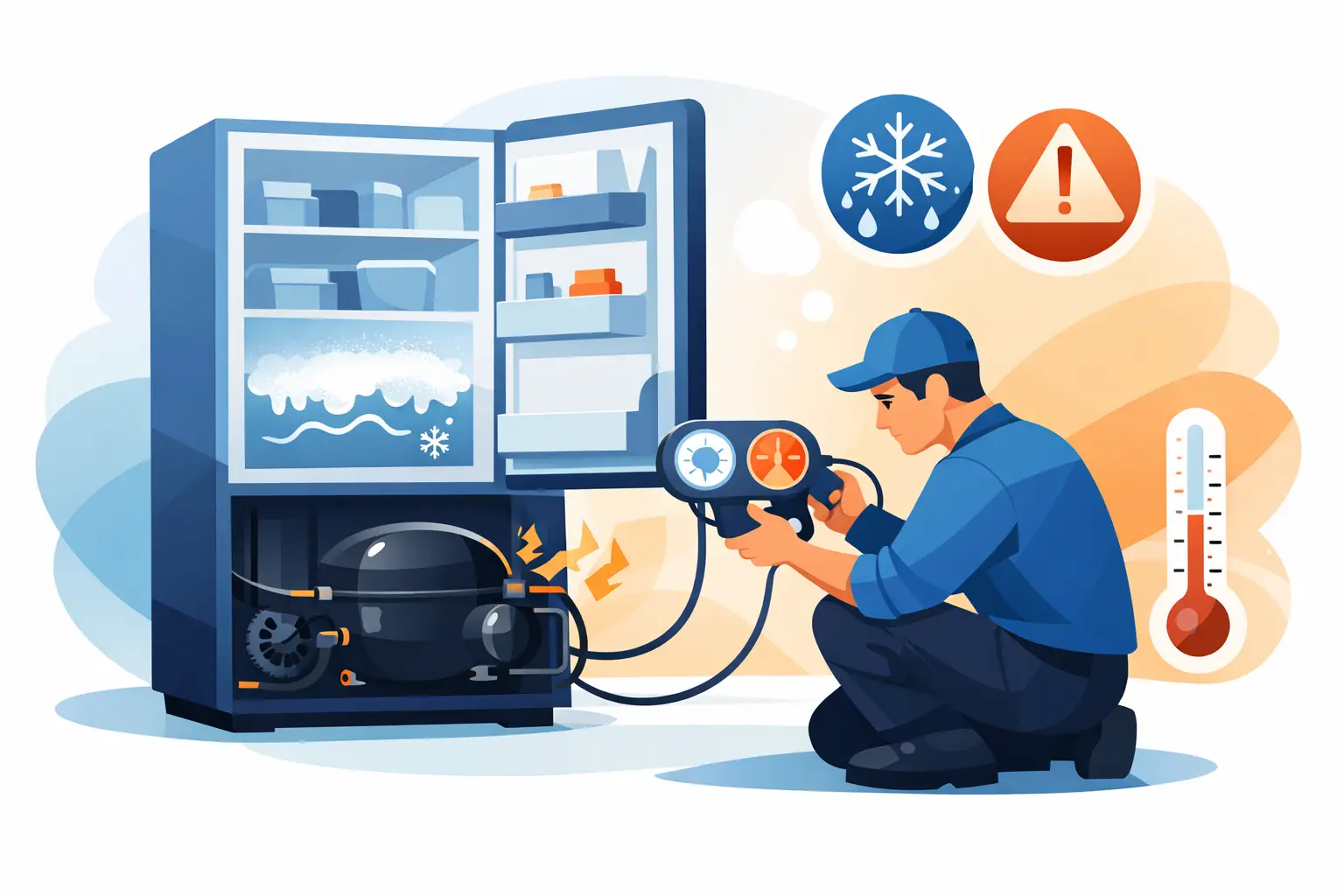
A refrigerator that suddenly feels warm can put hundreds of dollars in groceries at risk. The compressor is often blamed first, but it is not always the cause. Knowing how to spot a failing refrigerator compressor helps you act quickly, protect your food, and avoid paying for a major repair when the real issue is something simpler.
The compressor is the heart of the sealed cooling system. It compresses refrigerant and moves it through the appliance so heat can be removed from the refrigerator and freezer compartments. When it starts to fail, the signs can be serious, but they can also overlap with problems involving the condenser fan, start relay, evaporator fan, thermostat, control board, or dirty coils.
How to Spot a Failing Refrigerator Compressor
A compressor rarely fails without giving some indication that cooling performance has changed. The most reliable clue is a pattern: unusual sounds, poor cooling, repeated clicking, and excessive heat around the lower back of the refrigerator. One symptom alone does not confirm a bad compressor, but several symptoms together warrant professional diagnosis.
The refrigerator is warm but the lights are on
Interior lights, display panels, and even fans can continue working when the compressor is not running properly. If the refrigerator section is above 40°F or the freezer is softening, move perishable food to a working refrigerator or cooler as soon as possible.
First, check that temperature settings have not been changed and that doors are closing fully. If the appliance has been packed tightly with food, blocked vents can also restrict airflow. When settings and airflow look normal but both sections remain warm, the compressor or its supporting components may be involved.
You hear clicking, humming, or a brief buzz
A healthy compressor usually makes a low, steady hum while it runs. A failing unit may hum for a few seconds, click off, then repeat the cycle every few minutes. This often means the compressor is trying to start but cannot stay running.
However, the compressor itself may not be the failed part. A worn start relay, overload protector, or electrical issue can cause the same click-and-stop behavior. These parts are less expensive than a compressor, which is why accurate testing matters before approving a major repair.
The back or bottom of the refrigerator feels unusually hot
It is normal for the area near the compressor and condenser lines to feel warm. It should not be so hot that you cannot comfortably keep your hand nearby for a moment. Excessive heat can indicate a compressor working too hard, poor ventilation, a failed condenser fan, or coils coated in dust and pet hair.
Unplug the refrigerator before inspecting behind the lower rear panel. If accessible, look for heavy debris around the condenser coils and make sure there is adequate clearance around the appliance. Cleaning dirty coils may improve performance, but it will not correct an internal compressor failure.
The compressor runs constantly without reaching temperature
A refrigerator may run longer during hot weather, after a large grocery trip, or when doors are opened frequently. Constant operation becomes a concern when it continues for many hours and food is still not cold enough.
A struggling compressor can lose its ability to maintain proper pressure in the sealed system. Yet a refrigerant leak, damaged door gasket, defrost problem, or weak fan can create similar symptoms. A certified technician can check temperatures, electrical readings, airflow, and sealed-system pressures to identify the actual fault.
The freezer is cold but the refrigerator section is warm
This symptom is commonly mistaken for compressor failure. In many refrigerators, cold air is produced in the freezer and circulated into the fresh-food section. If the evaporator fan stops, air vents are blocked by frost, or a damper fails, the freezer may remain cold while the refrigerator compartment warms up.
Before assuming the compressor is failing, listen for the freezer fan when the door switch is pressed. Also look for an unusually thick frost buildup on the freezer’s rear interior panel. These signs often point to an airflow or defrost issue rather than a compressor problem.
Problems That Can Look Like Compressor Failure
Because compressor replacement is a major repair, it should never be based on sound alone. Several common issues can prevent cooling while leaving the compressor perfectly serviceable.
A failed condenser fan can cause overheating and weak cooling, especially on models with coils beneath or behind the unit. Dirty condenser coils make it harder for the refrigerator to release heat. A damaged start relay can keep the compressor from starting. A faulty temperature sensor or control board may fail to send the proper signal for cooling. In frost-free models, a defrost system problem can block airflow with ice.
There is also the possibility of a sealed-system refrigerant leak. Refrigerant work requires specialized equipment and proper handling. Do not attempt to pierce lines, add refrigerant, bypass electrical parts, or remove protective covers while the appliance is powered. Those actions can create safety hazards and may turn a repairable issue into a more expensive one.
Simple Checks You Can Make Safely
Homeowners can rule out a few basic causes before booking service. Confirm that the refrigerator has power and is plugged directly into a properly functioning outlet. Check that the temperature controls are set correctly, the doors seal tightly, and food packages are not blocking interior vents.
If your model has accessible condenser coils, unplug the unit and gently vacuum dust using a brush attachment. Do not bend the coils or force tools into tight spaces. Then restore power and allow the refrigerator time to recover. Most units need several hours to stabilize after being unplugged or adjusted.
Pay attention to what changes after these checks. A refrigerator that starts cooling normally after coil cleaning may have been overheating. A refrigerator that continues clicking, runs hot, or cannot hold safe temperatures needs a qualified diagnosis.
When to Call for Refrigerator Repair
Call for service promptly if the refrigerator is warm, the compressor repeatedly clicks off, the unit runs constantly, or you smell a burning odor near the lower rear area. Unplug the appliance if you notice smoke, sparking, melted wiring, or a strong electrical smell. Do not continue operating it while waiting for help.
A professional refrigerator technician can test the start components, compressor windings, fans, controls, and sealed system. This approach protects you from replacing a compressor unnecessarily. If the compressor has failed, the technician can explain whether repair makes financial sense based on the refrigerator’s age, condition, warranty coverage, and the cost of the repair.
For a newer or higher-end refrigerator, compressor repair can often be worthwhile, particularly if other components are in good condition. For an older unit with multiple problems, replacement may be the better long-term value. There is no one answer for every appliance, and a clear diagnosis gives you the information needed to decide confidently.
Keep Food Safe While You Wait
Keep refrigerator and freezer doors closed as much as possible. An unopened refrigerator generally keeps food cold for about four hours during a cooling failure, while a full freezer can hold temperature for much longer than a partially filled one. Use an appliance thermometer if available rather than relying on how cold the cabinet feels.
Perishable food that has been above 40°F for more than two hours may not be safe to keep. When in doubt, prioritize food safety over saving groceries. A repair visit can restore the appliance, but it cannot make unsafe food safe again.
A refrigerator problem is disruptive, but it does not have to become a guessing game. Appliance Tech Pros can assess the full cooling system, explain the cause in plain language, and help you choose the repair path that protects your home, food, and peace of mind.