A gas leak is not an appliance problem to watch for a few days. If you notice any of the top signs of gas leak in your home, treat it as a safety concern first and a repair issue second. Natural gas is used safely in many homes every day, but a damaged connection, failing valve, loose fitting, or malfunctioning gas appliance can create a serious risk when gas escapes.
The right response is simple: get people and pets away from the suspected leak, avoid anything that could create a spark, and contact your gas utility or emergency services if the danger appears immediate. Once the area has been made safe, a qualified gas appliance technician can identify the source and complete the necessary repair.
The Most Common Signs of a Gas Leak
A rotten egg or sulfur smell
Natural gas has no natural odor. Utilities add a sulfur-like chemical called mercaptan so people can recognize a leak quickly. Many people describe it as the smell of rotten eggs, sulfur, or spoiled cabbage.
If that odor is strong, persistent, or becomes more noticeable near a gas stove, oven, furnace, water heater, dryer, fireplace, or gas line, do not assume it will disappear on its own. A faint odor can still indicate a small leak, while a strong odor may point to a more urgent release of gas.
Keep in mind that food waste, drains, and certain cleaning products can sometimes create similar smells. The difference is usually location and consistency. An odor that appears around a gas appliance, connection, shutoff valve, or meter deserves immediate attention.
A hissing or whistling sound
Gas escaping under pressure can make a hissing, whistling, or soft roaring sound. You may hear it near a gas line, behind a range, around the appliance connection, or close to an outdoor meter.
A loud hissing noise, especially when paired with a gas odor, can indicate a significant leak. Leave the building promptly. Do not try to locate the exact source by leaning in, moving the appliance, or touching the gas connection.
Smaller leaks may not make any noise at all, which is why sound should never be the only thing you rely on. Smell, appliance performance, physical symptoms, and visible clues all matter.
Dead or discolored plants near a gas line
A leak outdoors can affect grass, shrubs, and plants because escaping natural gas displaces oxygen in the soil. If one patch of lawn suddenly looks brown or dead while the surrounding area is healthy, it may be worth investigating.
This sign is not conclusive by itself. Heat, pests, pet activity, and irrigation issues can also damage landscaping. However, dead vegetation near a gas meter, underground service line, or exterior appliance connection should not be ignored, particularly if you also smell gas nearby.
Bubbles in standing water
When a buried gas line leaks, you may see bubbles rising through puddles, wet ground, or standing water near the line. In some cases, dirt or dust may also appear to blow upward from the ground.
Stay clear of the area and avoid using equipment nearby. Do not dig, probe the soil, or attempt to cover the suspected leak. Gas line work requires proper testing equipment and trained professionals.
Unusual symptoms that improve when you leave
A gas leak can reduce the amount of oxygen available in an enclosed space. Exposure may cause headaches, dizziness, nausea, fatigue, lightheadedness, throat irritation, or shortness of breath. These symptoms can have many causes, including illness, dehydration, or poor ventilation, so they do not automatically mean there is a gas leak.
The concern increases when multiple people in the building feel unwell at the same time, symptoms begin near a gas appliance, or everyone feels better after stepping outside. Get fresh air immediately and seek medical help if anyone has trouble breathing, chest pain, confusion, or severe symptoms.
Do not confuse a natural gas leak with carbon monoxide exposure. Carbon monoxide is colorless and odorless, and it can be produced when a fuel-burning appliance is not operating or venting correctly. Working carbon monoxide alarms are essential, but they do not replace paying attention to gas odors or other leak signs.
Gas Appliance Problems That Need Prompt Service
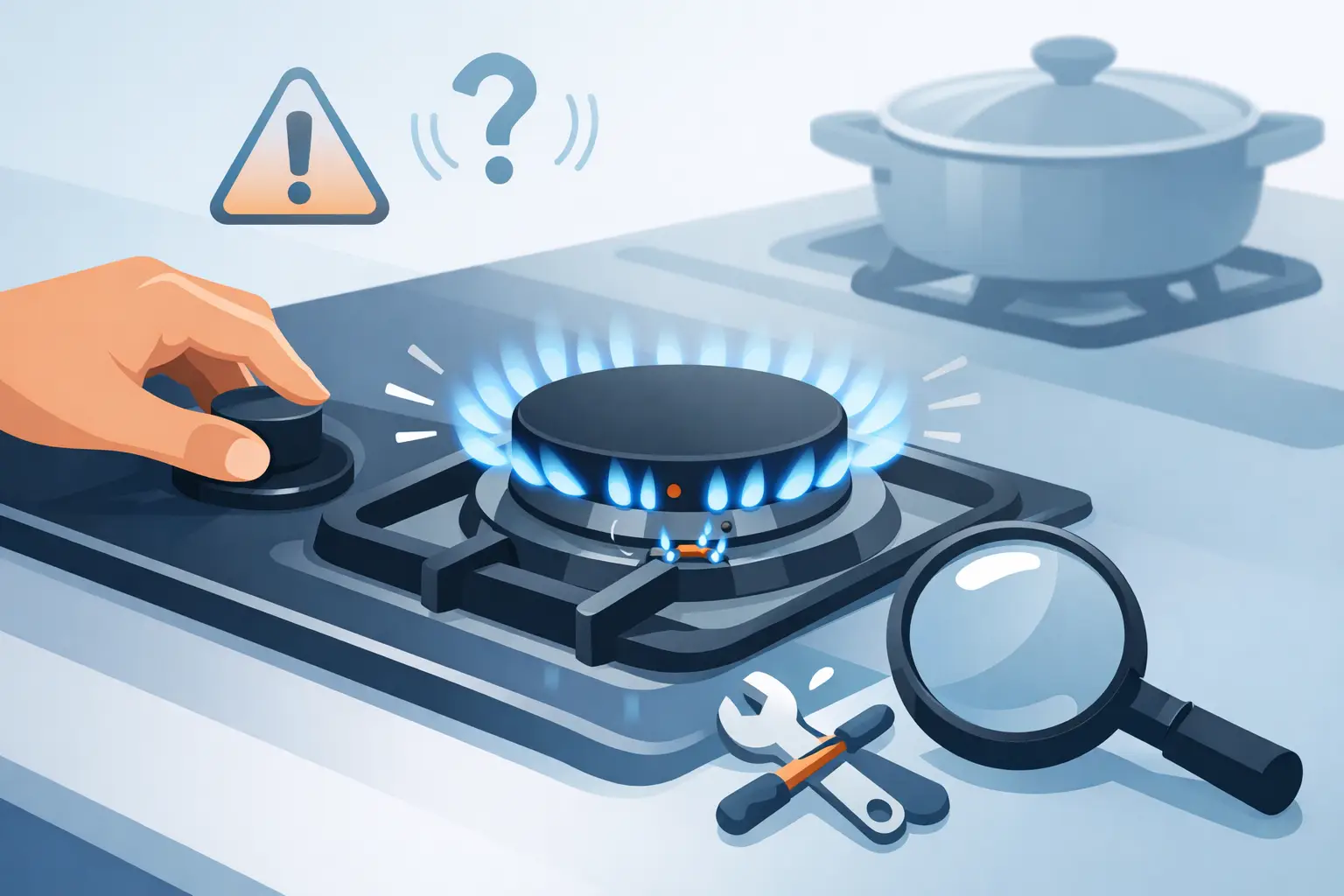
Not every gas appliance issue means gas is leaking, but some warning signs should lead to a professional inspection. A gas stove burner that will not light, has an uneven flame, or produces yellow or orange flames may need cleaning, adjustment, or repair. A healthy gas burner typically produces a steady blue flame.
You may also need service if you smell gas only when an oven or stove is running, notice a pilot light repeatedly going out, hear clicking that continues after ignition, or find that a gas dryer is not heating properly. These issues can result from ignition failures, burner problems, damaged seals, blocked vents, or supply concerns. The cause matters, and guessing can make a minor repair more dangerous or more expensive.
A brief gas smell when lighting a burner can happen if ignition is delayed by a moment. But if the odor lingers, grows stronger, or occurs when all appliance controls are off, stop using the appliance and arrange qualified service. Never keep testing it to see whether the smell returns.
What to Do If You Suspect a Gas Leak
Your first priority is getting everyone safely away from the area. If you smell gas indoors, leave the home or building with your family and pets. Move to a safe location away from the structure before making calls.
Avoid actions that can create a spark. Do not turn lights or appliances on or off, use a garage door opener, plug in a device, light a match, smoke, or start a vehicle near the building. Do not use your phone until you are safely outside and away from the suspected leak.
Once you are at a safe distance, contact your gas utility’s emergency line or call 911 if the odor is strong, you hear gas escaping, or you believe there is an immediate danger. Follow their instructions. Do not reenter the property until you have been told it is safe.
If the situation is not an active emergency but you suspect a gas appliance is leaking or operating improperly, turn off the appliance only if you can do so without risk and without handling gas connections. Then schedule a qualified technician. Appliance Tech Pros provides safety-focused gas appliance diagnosis and repair for homeowners who need clear answers and dependable workmanship.
Why DIY Gas Leak Repairs Are a Bad Trade-Off
It can be tempting to tighten a connector, replace a valve, or pull out a range to inspect the line yourself. The trade-off is not worth it. Gas appliance connections require the correct materials, procedures, leak testing, and knowledge of applicable safety requirements. A connection that appears secure can still leak under pressure.
DIY work can also create secondary problems, including damaged flexible connectors, cross-threaded fittings, improper venting, and appliance performance issues. Professional service is not just about stopping a smell. It is about confirming the appliance and its gas supply are operating safely before they are put back into use.
Prevention Starts With Regular Attention
You cannot prevent every gas-related issue, but regular maintenance reduces the chance that a developing problem goes unnoticed. Keep the area around gas appliances clear, avoid storing flammable materials nearby, and do not force an appliance into a tight space where the gas connector can be bent or damaged.
Pay attention after moving a range, replacing flooring, renovating a kitchen, or installing a new appliance. These are common moments when a gas connection can be disturbed. A professional installation and inspection offer peace of mind, especially for older appliances or homes with aging gas lines.
Most importantly, trust your senses. A strange odor, unexplained hissing, recurring ignition issue, or sudden illness inside the home is enough reason to step outside and ask for help. Fast action protects your household, and a qualified inspection can help you return to a safe, comfortable home with confidence.