A stove burner clicking continuously can turn a normal meal into a stressful situation fast. The rapid ticking sound usually comes from the electronic ignition system trying to create a spark. Sometimes the cause is minor, such as water around a burner cap after cleaning. Other times, the clicking points to a worn switch, damaged igniter, or electrical issue that should be handled by a qualified appliance technician.
Before trying to troubleshoot, pay attention to what the stove is doing. If you smell gas, hear hissing, see a flame where it should not be, or cannot get the clicking to stop, do not keep testing the burners. Turn off the controls if it is safe to do so, leave the area, and contact your gas utility or emergency services as appropriate. Gas appliance concerns deserve a careful response.
Why a Stove Burner Clicks Continuously
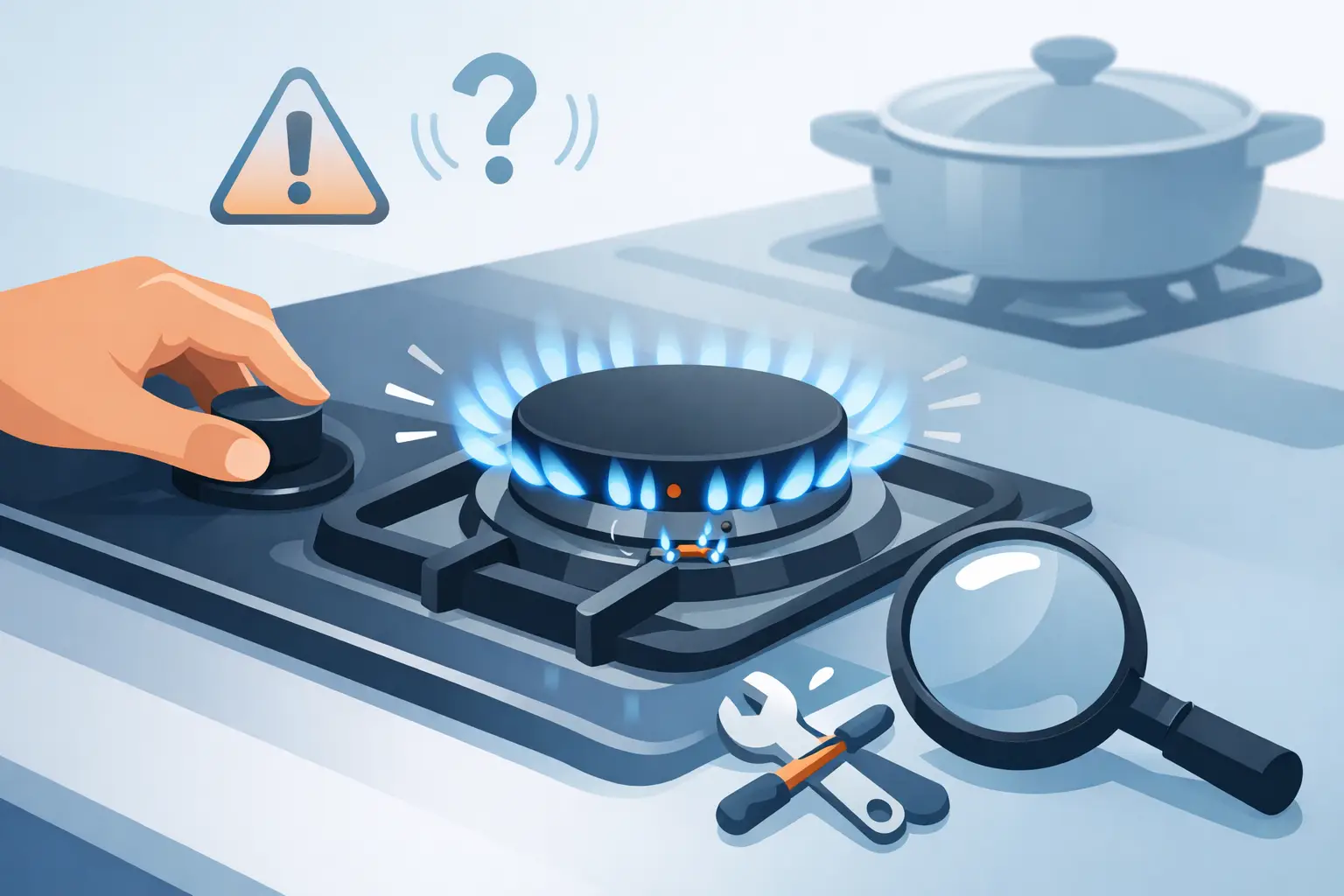
Gas cooktops use an ignition system to light each burner. When you turn a knob to the light position, an ignition switch sends power to a spark module. The module sends an electrical pulse to the igniter electrode near the burner, creating the familiar clicking sound and visible spark.
A few clicks while a burner lights are normal. Many modern ranges also continue sparking briefly if a flame goes out, helping the burner relight. Continuous clicking after the burner is lit, when every knob is off, or when the cooktop is not in use is not normal. It means the system is still receiving a signal to spark or is unable to recognize that ignition has finished.
The pattern matters. Clicking at one burner may point to that burner’s cap, igniter, or control switch. Clicking at every burner often suggests moisture, a stuck switch, or a problem with the spark module. A professional diagnosis prevents replacing the wrong part and helps protect the stove’s gas and electrical components.
Common Causes of Continuous Clicking
Moisture around the igniter
Water is one of the most common reasons for unexpected clicking. It can get beneath a burner cap during cleaning, after a boil-over, or from steam rising from a large pot. Even a small amount of moisture near the ceramic igniter or burner base can allow electricity to travel incorrectly and trigger repeated sparking.
If the cooktop was recently cleaned or something spilled, let it dry fully before assuming a part has failed. Remove the grates and burner caps once the surface is cool, then gently blot visible moisture with a clean, dry cloth. Give the area time to air-dry. Do not poke the igniter with metal tools or soak it with cleaner.
Food residue or a misplaced burner cap
Burner caps must sit flat and in the correct position. A cap that is slightly off-center can interfere with gas flow and prevent the flame from reaching the igniter properly. The ignition system may keep clicking because the burner is not lighting consistently.
Grease, sauce, crumbs, and dried food can cause the same problem. After the cooktop is cool, clean the burner cap and surrounding area according to the appliance manufacturer’s instructions. Make sure burner ports are clear and dry, then reinstall each cap securely. Avoid forcing any part into place.
A dirty or damaged igniter electrode
The igniter is the small ceramic-and-metal component beside the burner. It needs a clean surface and the right gap to produce a strong spark. Grease buildup, cracks in the ceramic, corrosion, or a bent electrode can make the spark weak, inconsistent, or continuous.
You may notice one burner clicking but failing to light, clicking after it lights, or producing a spark in an unusual location. A damaged igniter is not a reliable do-it-yourself repair. The part must be matched and positioned correctly, especially on a gas range where proper ignition and flame performance affect safety.
A stuck burner switch
Each burner knob is connected to a small ignition switch. Turning the knob activates the switch and starts the sparking process. If a switch becomes wet, worn, greasy, or mechanically stuck, it can keep sending the signal even after you turn the knob off.
This issue can be confusing because the clicking may continue from all igniters, even though only one burner control is causing it. Repeatedly turning knobs back and forth may not solve the problem and can make it harder to identify which switch has failed. A technician can test the switches and replace the faulty component safely.
A failing spark module or wiring problem
The spark module supplies power to the igniters. When it fails, the stove may click constantly, spark at random, click from multiple burners, or stop sparking altogether. Damaged wiring, loose connections, or electrical arcing can produce similar symptoms.
Because the cooktop combines electricity with gas, this is a repair best left to a trained professional. Accessing internal components may require disconnecting power, removing panels, and checking wiring around gas lines. The right repair is not simply the quickest part swap. It is the repair that restores safe, dependable operation.
Safe Steps to Take Before Scheduling Service
Start by turning all burner knobs completely to the off position. Check that no knob is caught between settings. If there is no gas odor and the clicking started after a spill or cleaning, allow the cooktop to cool and dry the accessible burner components carefully.
You can also check whether burner caps are level and whether debris is visible around the igniter. Do not use a toothpick, knife, wire, or abrasive pad on the igniter. Small damage to the electrode or burner ports can create a larger repair issue.
If the clicking continues after the cooktop is dry and reassembled, unplug the range or switch off power at the circuit breaker if you can do so safely. This stops the electrical sparking while you arrange service. For a gas range, do not disconnect gas lines or remove internal panels yourself.
If you smell gas at any point, skip all troubleshooting. Leave the area, avoid operating light switches or electrical devices, and contact your gas provider or emergency services from a safe location. Once the immediate concern is addressed, a qualified gas appliance technician can inspect the range before it is used again.
When Continuous Clicking Needs Professional Repair
A stove burner clicking continuously needs professional attention when drying and proper burner-cap placement do not stop it. Service is also recommended if a burner will not light, flames are uneven or unusually large, the igniter is visibly cracked, or the clicking starts without anyone touching the controls.
For landlords and small commercial kitchens, prompt repair matters even more. A range that sparks unpredictably can disrupt daily operations, frustrate tenants or staff, and create avoidable safety concerns. Addressing the issue early is often less disruptive than waiting for a complete ignition failure.
During a service visit, a qualified technician can inspect burner caps, electrodes, switches, wiring, the spark module, and control components. They can also check for proper ignition and flame behavior once the repair is complete. This approach helps ensure the stove works as intended rather than temporarily masking the symptom.
Appliance Tech Pros provides professional stove and oven repair with a safety-first approach, helping homeowners and businesses get dependable cooking appliances back in service. A clear diagnosis, quality replacement parts, and proper testing offer more peace of mind than guessing at an electrical or gas-related repair.
Can You Use the Stove While It Is Clicking?
It depends on the cause, but continued use is generally not a good idea until the issue is identified. If the burner lights normally after a minor spill and the clicking stops once the area dries, the stove may be fine. If clicking persists, happens with all controls off, or comes with ignition trouble, avoid using the cooktop.
Continuous sparking puts unnecessary strain on ignition components. More importantly, an unreliable igniter can make it difficult to confirm that a burner is lighting correctly. That is a poor risk to take when gas is involved.
A quiet, properly lighting burner is something most households take for granted. When the clicking will not stop, treat it as an early warning, not just an annoying sound, and arrange qualified service before the next meal depends on it.